
Flooring Professionals To The Leisure Industry
Courtship Flooring is a commercial sports flooring contractor working in Derbyshire and across the UK. Our work ranges from city academies to rural facilities where access and entrance wear are the defining issues.
We have been specialising in indoor sports and commercial timber floors since 1987. The business is family-run, nothing is subcontracted, and the crew who survey a building are the crew who work on it. Domestic and residential projects fall outside what we do and are looked after by our sister company, Ryan’s Restorations.
In Derbyshire, as elsewhere, a sports hall floor refurbishment is often the most cost-effective option: a full sand, reseal and reline that brings an existing floor back for a fraction of the cost of replacement.
Overnight/Weekend Installations
Professional Cleaning Demonstrations
Squash Court Maintenance
Recommended Cleaning Products
Professional Pendulum Slip Testing
Deep Clean & Reseal Service
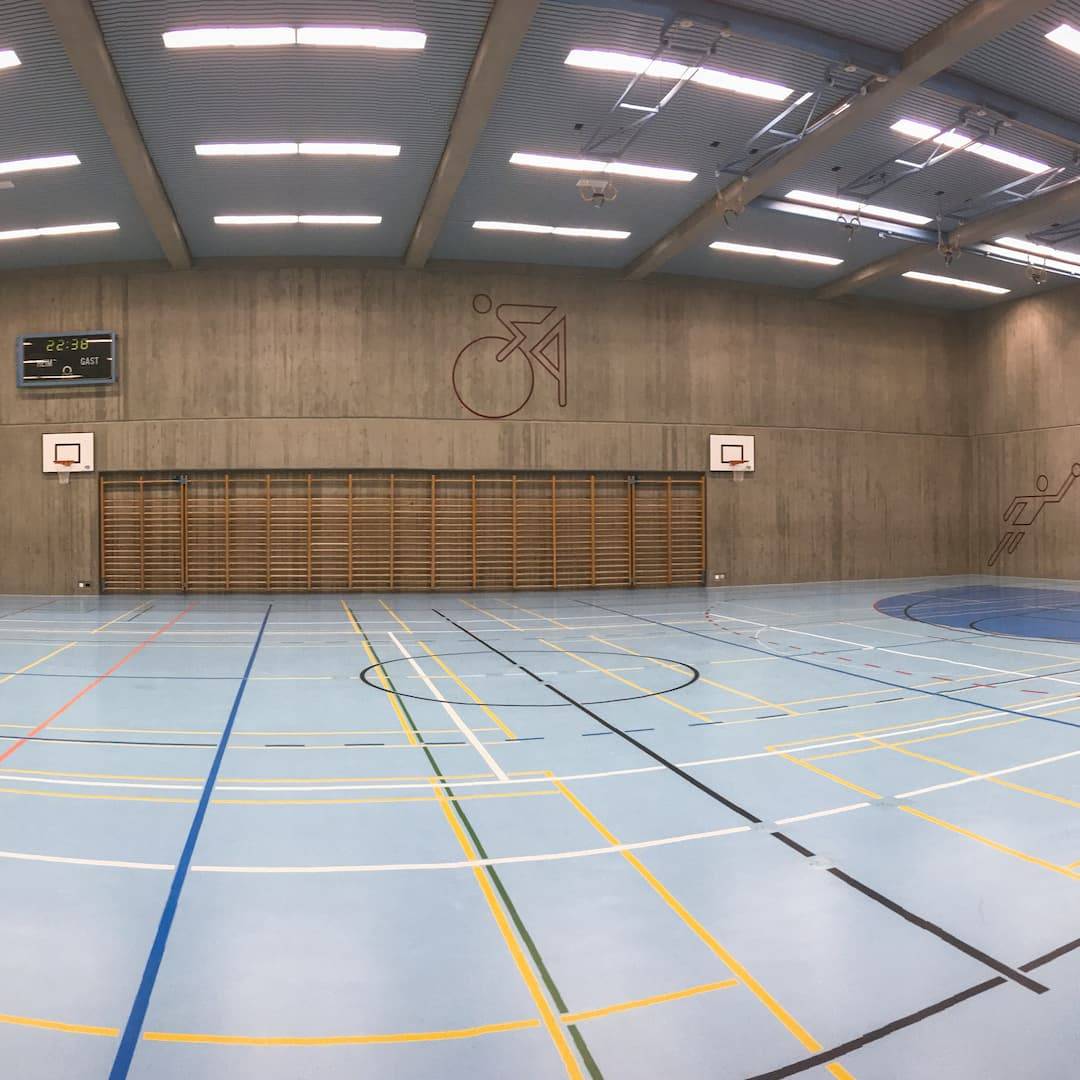
Users report vague symptoms: the floor feels dead in one area, or slippery, or noisy. Each points to a different cause, and treating the symptom instead of the cause wastes money.
Dead areas indicate a failed resilient layer or a batten that has lost contact. Slipperiness usually means cleaning residue rather than a worn seal. Squeaking generally traces to fixings or sub-floor ventilation. We diagnose before quoting, because the right repair is frequently far cheaper than the assumed one.
Abrasive material walked in from outside does more damage to a sealed floor than any sport. Sand, grit and stone particles act like sandpaper underfoot and will cut through a new finish years before its time.
Effective matting at every entrance, properly sized barrier zones and a cleaning routine that actually removes grit rather than redistributing it will comfortably double the life of a finish. We advise on all of it as part of handover.
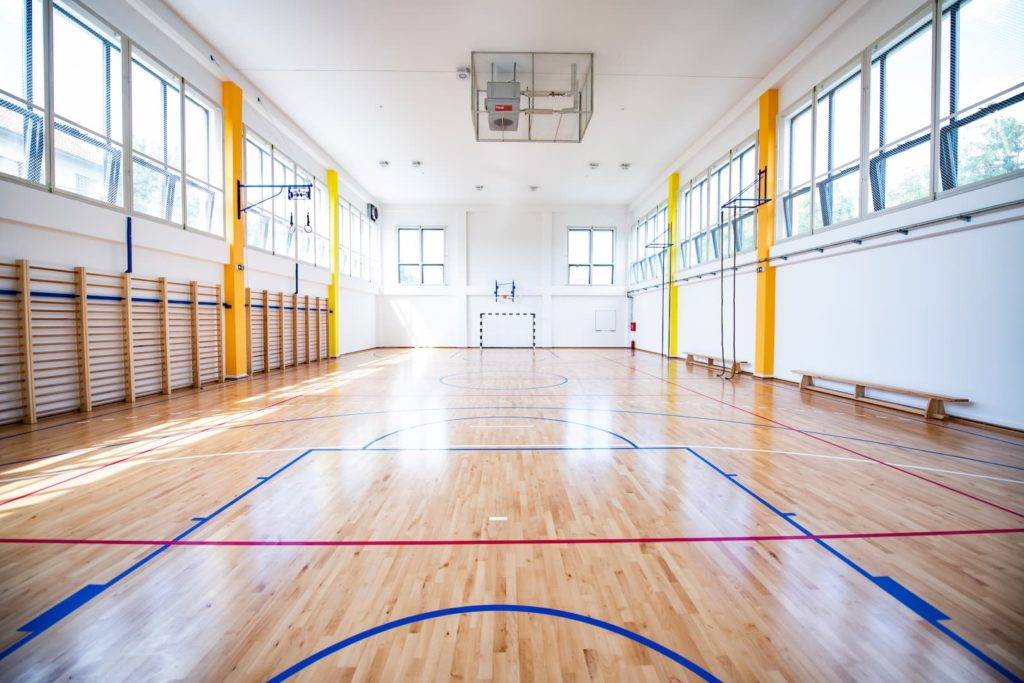
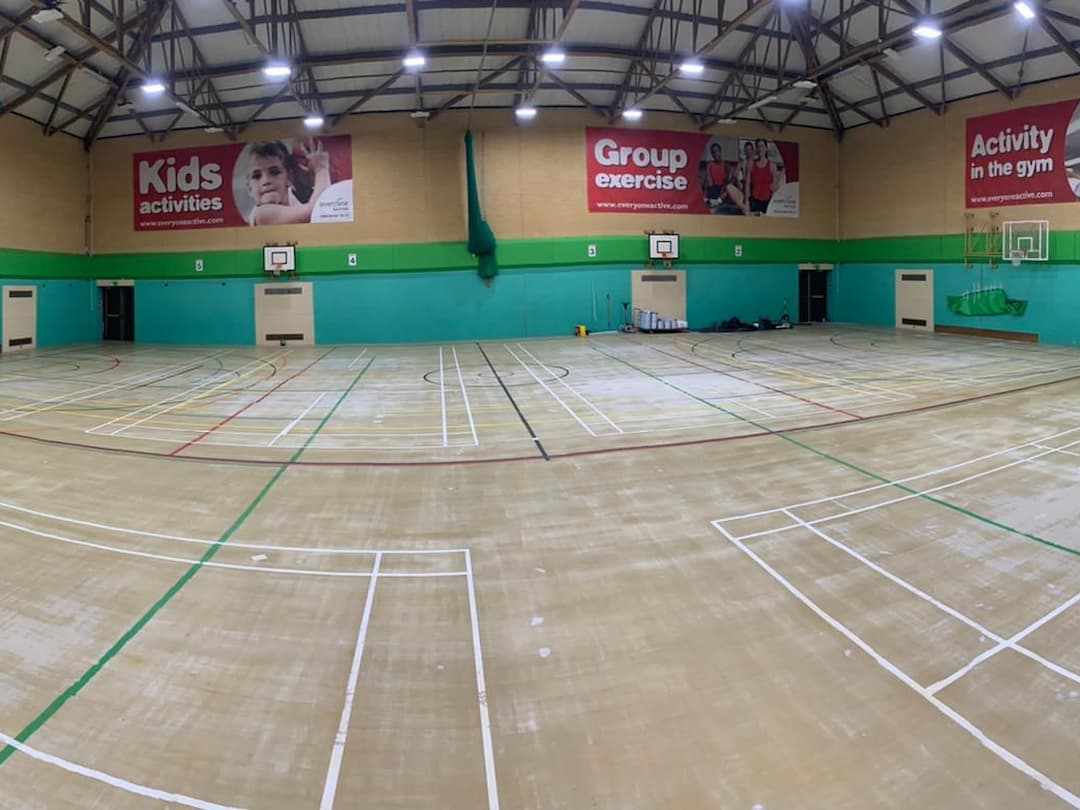
Localised problems deserve localised solutions. A water-damaged section, a small area of impact damage or a failed patch near a doorway can usually be cut out and repaired without touching the rest of the floor.
Timber is matched by species and grade so the repair blends into the surrounding surface, and where the whole floor is then sanded and sealed the join disappears entirely. Because repairs are done in-house, small jobs are viable rather than an inconvenience.
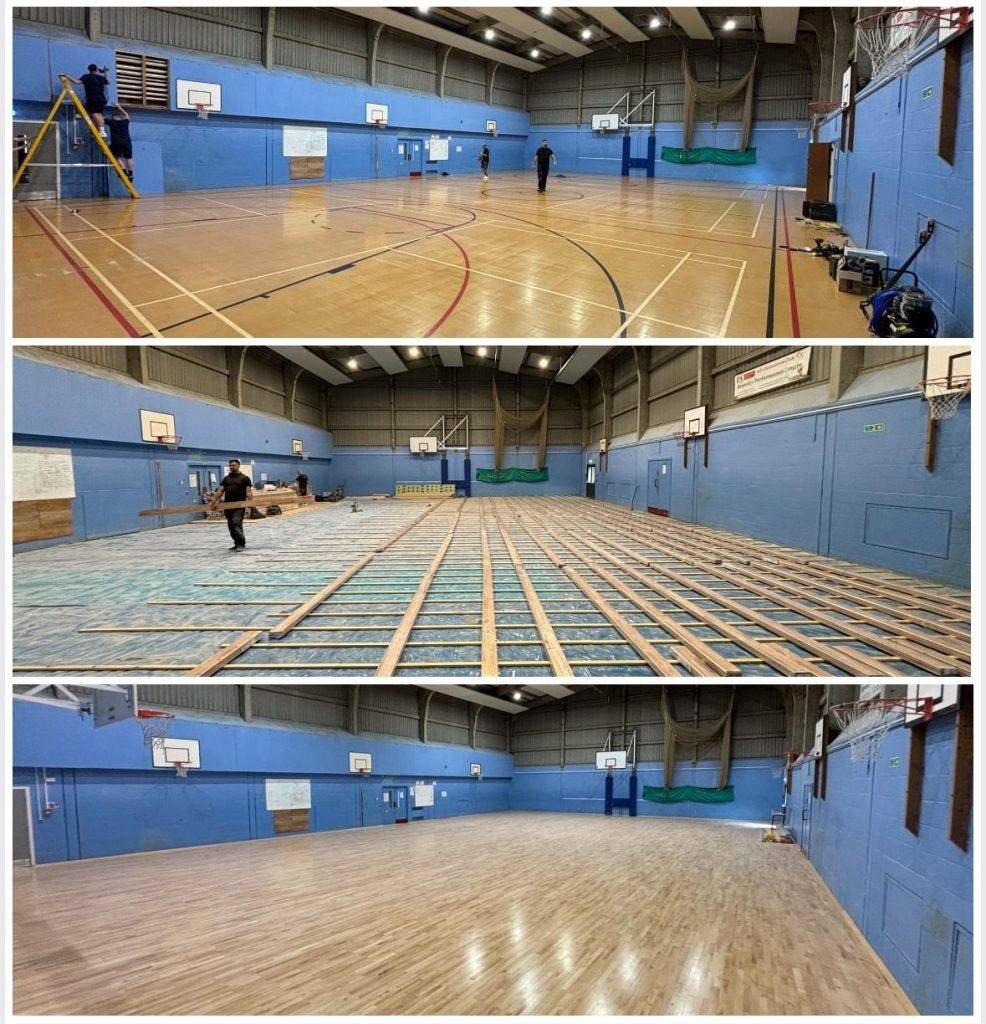
Harris Academy wanted a sports floor to match its ambitions, so we fitted a complete Junckers solid-beech sports system, the same Danish flooring specified in elite competition venues, finished with full multi-sport line markings.
An installation like that is a long-term statement: properly maintained, it will outlast every pupil currently on the roll. The project ran to programme from bare sub-floor to handover.
~ Matthew Evans
An outstanding company to deal with and they couldn’t have been better to work with. St George’s Ascot now has a stunning new sports hall floor and we are delighted. From quote, support, delivery and after sales, the Team has been brilliant. Thank you. 
~ James Anderson







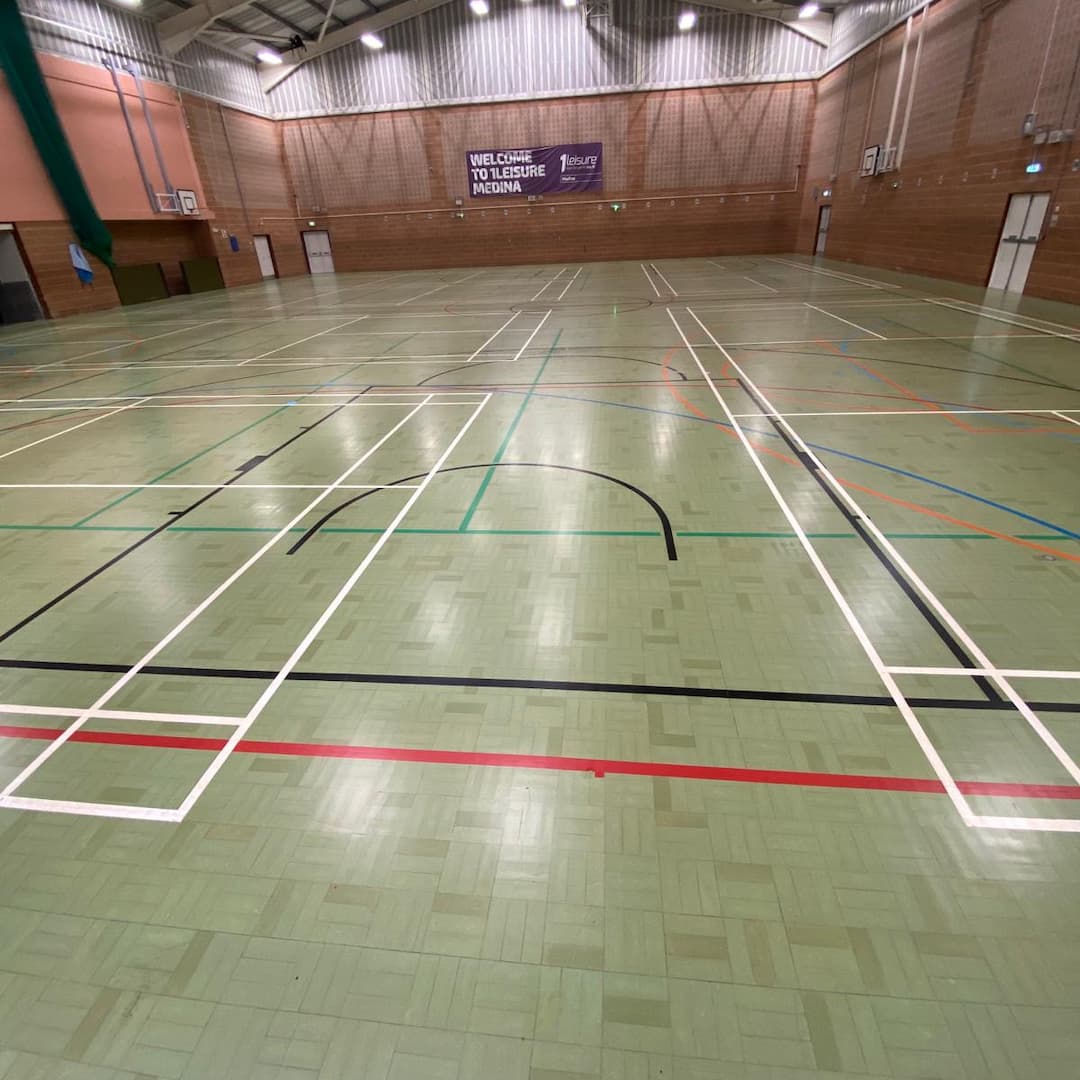
Councils, academy trusts and leisure trusts in Derbyshire increasingly buy floor work through formal procurement, and we are set up for it.
We respond to tenders and mini competitions, price against schedules of rates, and hold the documentation a procurement team expects: insurances at the levels frameworks specify, quality and environmental procedures, health and safety accreditation, safeguarding arrangements and financial references. Where a framework already exists we can usually be called off under it, and where a trust prefers three quotes we provide a specification that lets other bidders price like for like.
What we ask in return is a proper site visit before pricing. A tender priced from a floor plan alone produces either a padded figure or a variation later, and neither serves the buyer. A surveyed price is a fixed price.
A dance studio asks for the opposite of a basketball court. Dancers need a controlled slide for turns and a floor that absorbs repeated landings in the same spot, whereas a court finish is chosen for grip. Specify one as the other and injuries follow.
The usual build is a sprung base with a vinyl performance surface for ballet and contemporary, or sealed timber with a lower slip finish for tap and musical theatre. Studios on upper floors of a Derbyshire school or arts centre also need the sprung layer to work acoustically, so the class below is not counting every jump. Drama spaces are often painted black, and that coating has to be a proper floor system, not emulsion.
Where one room serves several disciplines we say plainly which gets priority, because a floor that tries to suit everyone suits nobody well.
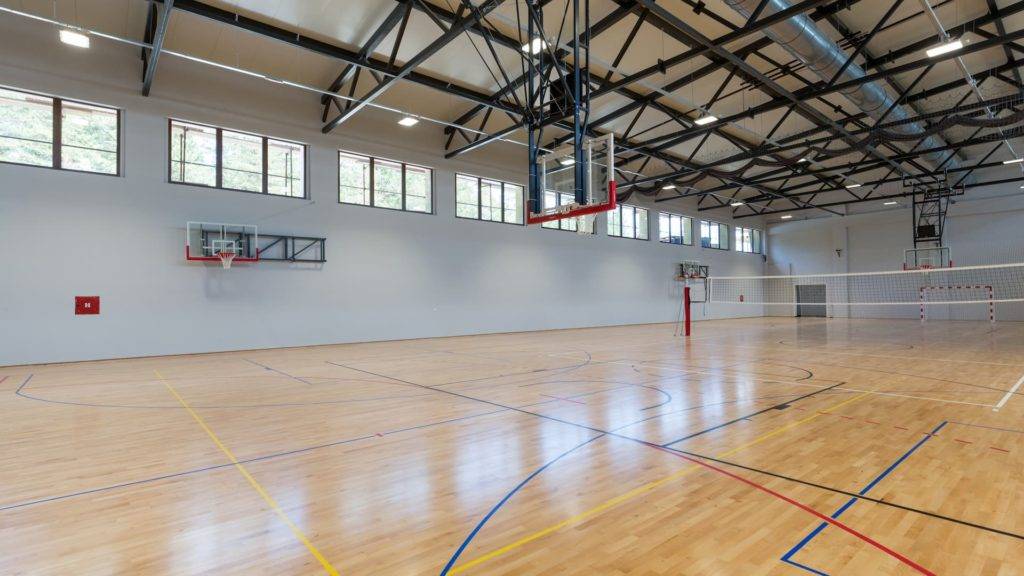
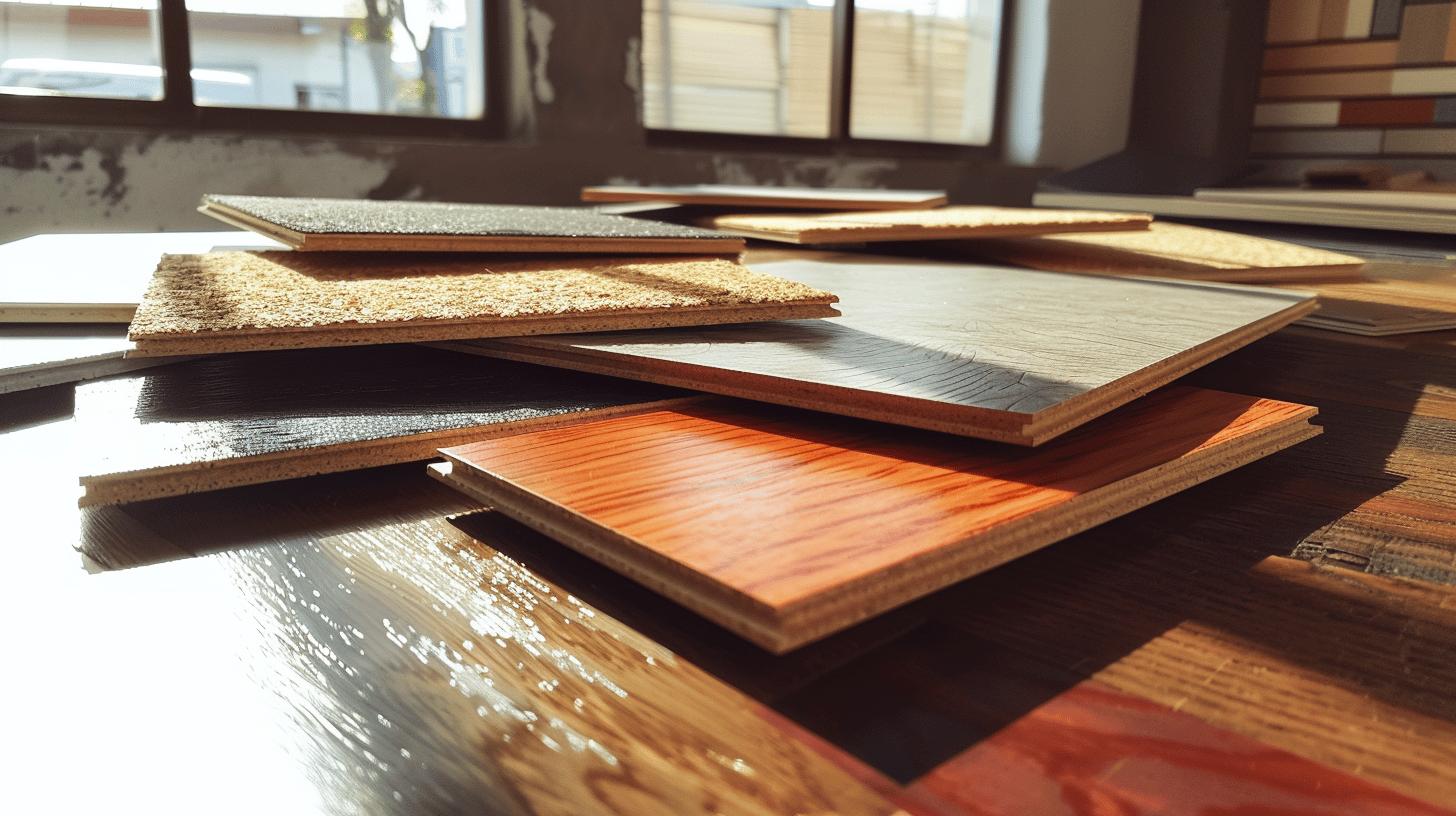
Our work is guaranteed, and the guarantee is worth something because we have been here since 1987 and intend to be here when you call. If a seal fails, a repair lifts or a marking peels through something we did, we come back and put it right at our cost.
It helps to be clear about what sits outside that. Damage from a roof or radiator leak, a floor polished against the care sheet we left, equipment wheeled on before the cure time, or a slab we advised was too wet are building and management matters, and we say so at the time, not in small print.
Before we start on a Derbyshire hall you also hear about any risk we can see: a stain that may not fully lift, a repair that may not match perfectly. Fewer surprises means fewer arguments, and it is why clients come back.
Derbyshire gives us a mix of academy and school sport, leisure facilities and a substantial amount of older community building stock, and each brings a different problem.
School and academy halls are the largest group. Many date from the nineteen sixties and seventies with sprung timber floors that are structurally sound but have gone too long between refinishes. Those are almost always better restored than replaced, and a survey usually finds more life left in them than the school expects.
Granwood turns up regularly in this part of the country, in school halls and church halls alike. It needs a specialist approach rather than timber sanding, and a great many Granwood floors described as finished simply need rebedding, appropriate preparation and the right coating system.
Village and community halls are the third group, and they are frequently the most rewarding work we do. Decades of polish, scoring from chairs and tables, and a floor underneath that has plenty of depth left.
We quote by element throughout so a school or a hall committee can phase the work across two budget years if that is what makes it possible.
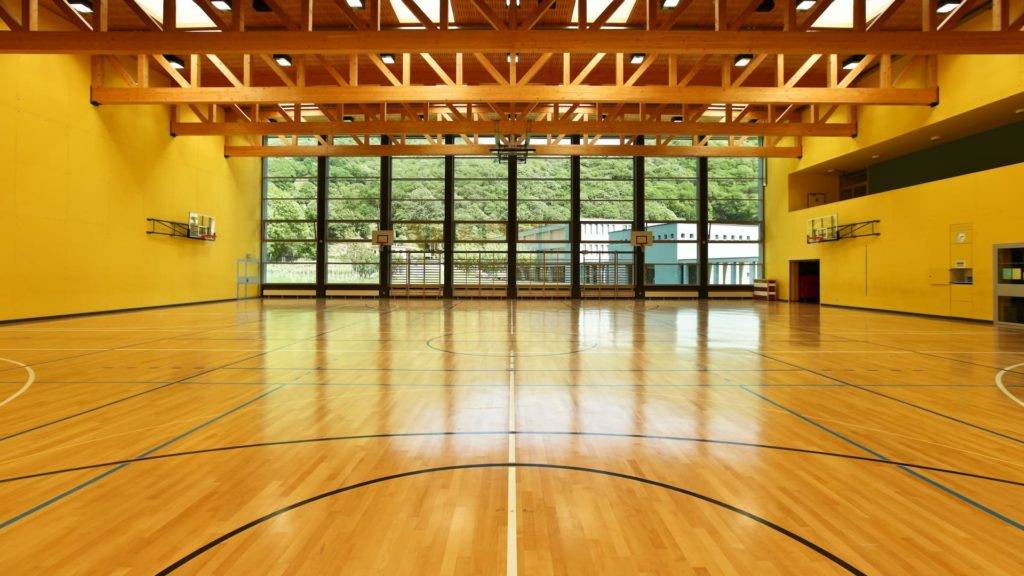
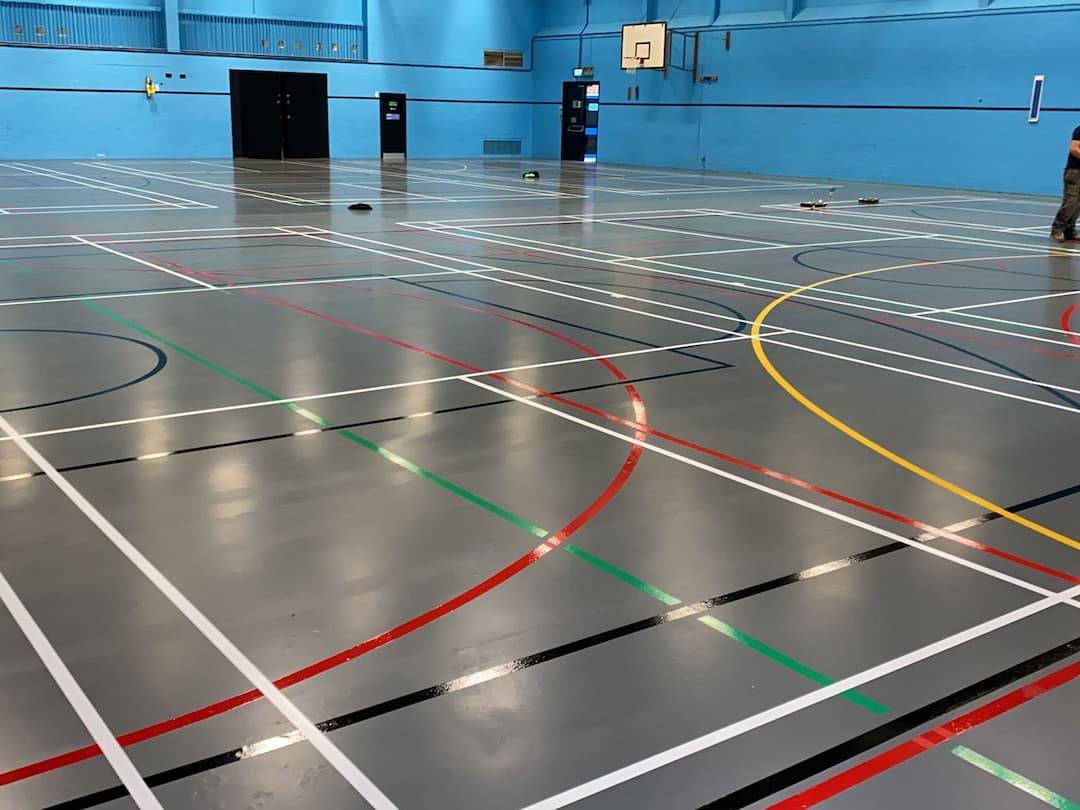
Line marking enquiries from Derby and the rest of Derbyshire usually fall into three groups: halls whose lines have simply worn out, halls marked to an old layout that no longer matches current dimensions, and halls that need a new sport added. Each needs a different approach, so we start by checking what is already on the floor against the published court sizes.
Worn but correct lines can be renewed during a screen and recoat, which keeps the cost down because the floor is being refinished anyway. Lines that are out of specification are better removed and set out again from scratch, normally as part of a sand and seal so the old paint comes off with the old lacquer. Adding a sport such as pickleball or futsal means fitting a new court into an existing scheme without cluttering it, which is mostly a question of colour and line weight.
Our sports hall markings and repainting and relining pages explain the options in more detail.
Most Derbyshire enquiries come down to one of three situations.
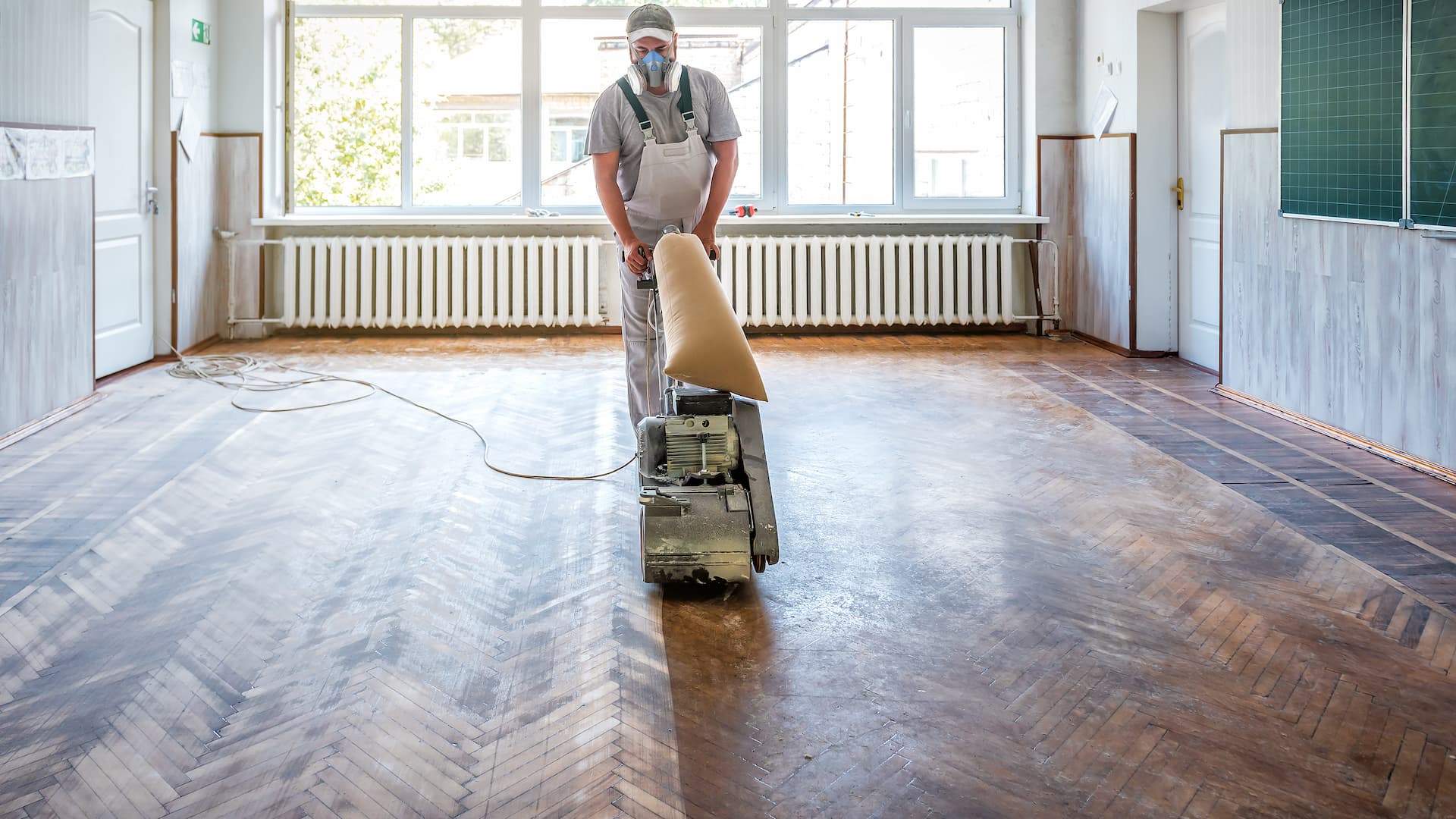
The first is a school hall where the traffic lanes have worn through to bare timber while the perimeter still looks presentable. Once the seal has gone, dirt gets into open grain and stains, and there is a point beyond which sanding will not fully lift it. Catching that early is the difference between a straightforward refinish and a compromised result.
The second is Granwood in older school and church halls. It needs a specialist approach rather than timber sanding, and most of the Granwood floors we are asked to look at are worth saving rather than replacing.
The third is community halls where decades of polish have built up over the floor. That has to be removed chemically before any sanding, because it clogs abrasives, and it is the item most often missed in quotations from firms that do not do this work regularly.
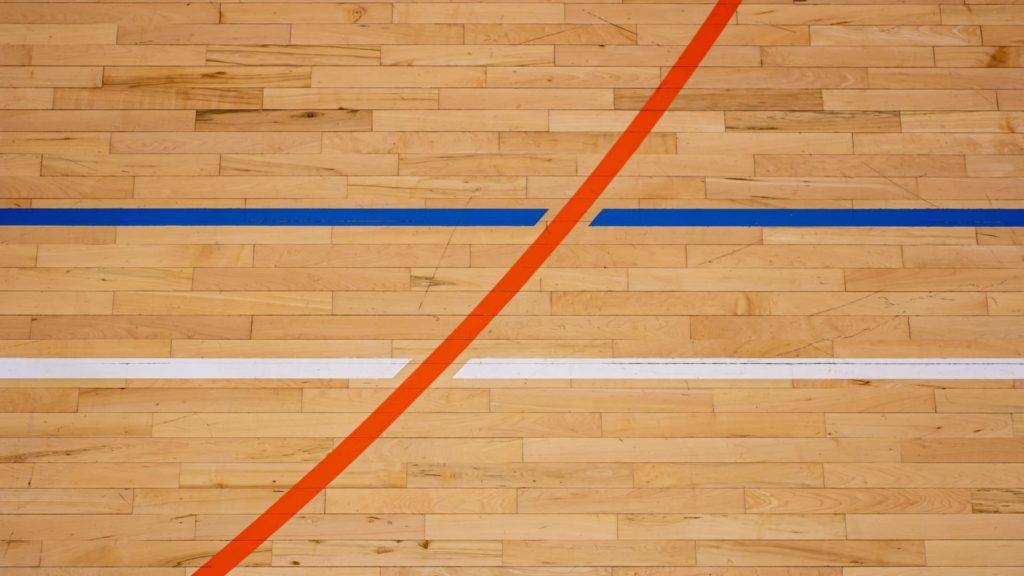
A school crest at centre court or a club badge in the key turns a refurbished floor into something people photograph, and it costs least while the floor is already open.
We work from your artwork, scale it to the space, and paint it between coats of seal so it sits under the final finish where trainers and scrubber driers cannot reach it. Colours are checked under the hall lighting first, because LED fittings shift shades in ways a screen does not show. Coloured zones work the same way: a shaded key, a contrasting goal circle or a full colour change to a synthetic floor, all sealed in.
Two cautions. Keep the design out of the busiest traffic lanes if you want it looking sharp for years, and remember that on a Derbyshire hall due a full sand in a decade, the logo goes with the old finish and is repainted with the new.
What the floor needs sets the price more than anything else. A deep clean is the smallest spend, a screen and recoat next, a full sand and reseal above that, and a new system only where restoration is impossible. We survey free and price each realistic route.
Yes, from the Peak District villages to the towns in the south, and well beyond the county. Rural halls with awkward access are surveyed, priced and planned before we set off, so nothing extra for travel appears part way through a job.
Yes. If a hall needs a deep clean and nothing more, that is the recommendation, in writing. It costs us a job that year and earns the next one, which is how a firm stays in business for nearly forty years.
It depends on the timber left above the tongue, which we measure at a socket or threshold instead of guessing. A floor sanded every decade may have several cycles left. One that has been machined every three or four years may have none.
A light abrasion of the existing seal with a fine mesh, followed by fresh coats of two pack polyurethane. No timber is removed. It restores grip and appearance for a fraction of a full sand and is the right choice while the seal is worn but unbroken.
Yes. We regularly provide the specialist flooring package within a wider refurbishment, and we are used to inductions, permits, programme meetings and site rules. We just ask that the slab is handed over dry and the building is watertight before we lay timber.
Satin nearly every time. Gloss impresses on the day it is handed over, then shows every scuff and throws glare under modern lighting. Satin hides wear, photographs well and keeps its look for years, which is why it is the standard for sports halls.
A screen and recoat every two to three years and a full sand about every ten, adjusted for how hard the hall works. Community lettings and leisure use shorten the interval. An annual look at the floor tells you which year you are actually in.
Neighbouring counties we cover include Nottingham, Nottinghamshire, Sheffield, Staffordshire and Shropshire. See all areas we cover.
Book a free survey of your sports hall floor anywhere in Derbyshire. We diagnose what is actually wrong, price the least expensive fix alongside the full one, and put a date on it. Call 01823 674562 or send us a message.