
Flooring Professionals To The Leisure Industry
Courtship Flooring is a commercial sports flooring contractor working in the West Midlands and across the UK. A dense concentration of schools, universities and leisure facilities makes this one of our busiest regions for estate work.
Established in 1987 and still family-run, we install, refurbish, sand, seal, mark and maintain indoor sports floors for schools, academies, colleges, universities, leisure trusts, local authorities and clubs. Every stage is carried out by our own team. We do not undertake domestic work; that is handled by our sister company Ryan’s Restorations.
Projects in West Midlands are carried out by the same in-house team that delivers all of our sports hall flooring work across the UK.
Overnight/Weekend Installations
Professional Cleaning Demonstrations
Squash Court Maintenance
Recommended Cleaning Products
Professional Pendulum Slip Testing
Deep Clean & Reseal Service

Assessing an estate as a single exercise produces information that individual surveys never do: which floors share a common defect, which were installed by the same contractor to the same specification, and where a single intervention across several sites is cheaper than three separate ones.
We survey them together, report on them together, and price them as a programme. The comparison alone frequently changes which work gets done first.
University sport combines elite-standard requirements with punishing usage: performance squads in the morning, timetabled teaching through the day, clubs and intramural leagues into the evening.
That demands surfaces specified for both performance and volume, and programmes that fit vacation windows precisely. We plan around the academic calendar and provide the documented handovers estates departments require for their records.
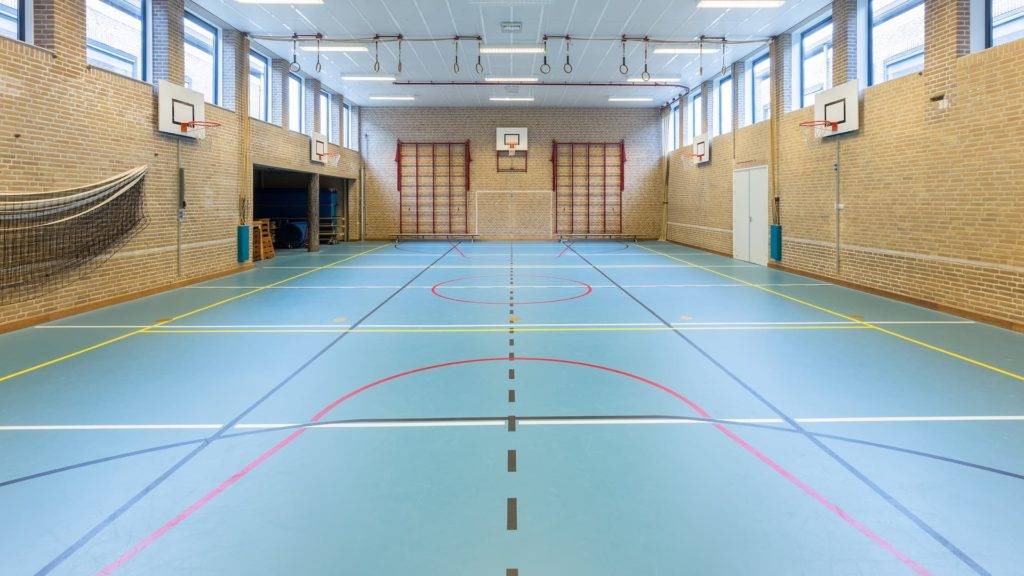
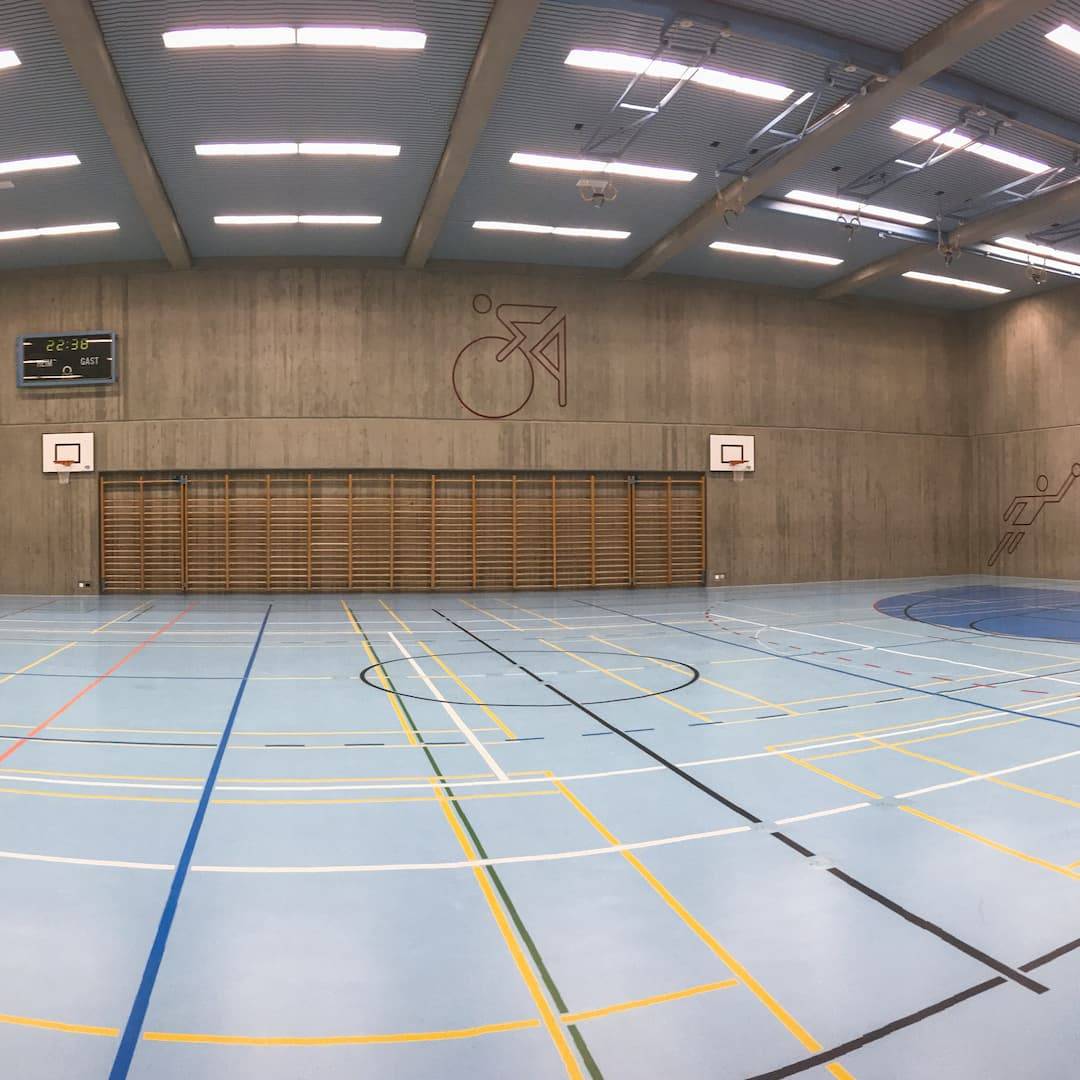
Facilities hosting both performance sport and community access face a genuine conflict. Elite play wants the shock absorption and ball response defined in BS EN 14904; community use wants durability against furniture, footwear and constant traffic.
The workable answer is usually a high-quality system with a maintenance regime tuned to the volume rather than a compromise on the specification itself. We will set out precisely where the balance falls.
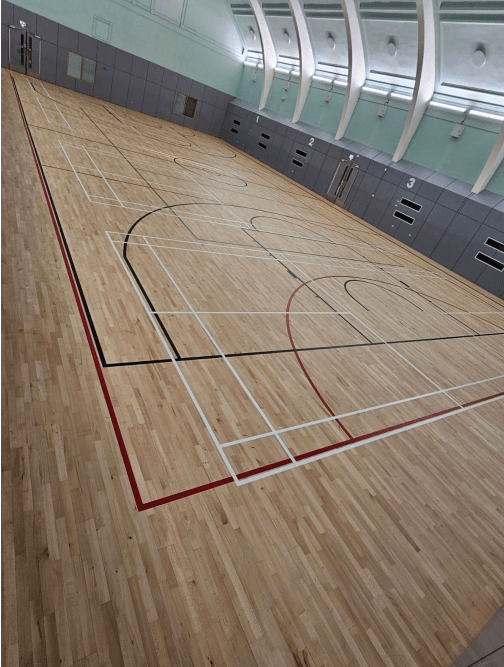
Years of heavy use had left the sports hall floor at Aston University dull, patchy and worn along every busy lane. Our team sanded it back to bare timber, made good the damage, then rebuilt the finish with a durable seal and a full set of new markings, working around a demanding academic timetable.
The before and after photographs show what a properly executed refurbishment delivers: a floor that looks and plays like new, for a fraction of replacement cost and without weeks of disruption.
~ Matthew Evans
An outstanding company to deal with and they couldn’t have been better to work with. St George’s Ascot now has a stunning new sports hall floor and we are delighted. From quote, support, delivery and after sales, the Team has been brilliant. Thank you. 
~ James Anderson








Not every tired hall needs taking back to bare timber. A screen and recoat lightly abrades the existing seal and lays a fresh top coat of two pack polyurethane over it. It restores grip and appearance in days and removes no timber at all.
It works while the seal is worn but still intact. Once the lacquer has gone through to bare board in the traffic lanes, dirt is sitting in open grain and only a full sand will bring the floor back. Repairs and fresh setting out also need bare timber.
A well run hall wants a recoat every two to three years and a full sand roughly every ten. Across the West Midlands a good deal of the post war stock has skipped the recoats for years and is now on its second full sand in a decade, which is timber gone for good.
Victorian and Edwardian school halls, of which the region has many, were built with high ceilings and long corridors that carry fine dust a surprising distance. Every sander we run, including the edging machines, is coupled to sealed extraction so the dust never leaves the machine.
The hall is screened and doors are taped, and we walk the building with your site manager first to find where ventilation links the hall to classrooms, kitchens or a swimming pool. Those routes are isolated before the first pass, because shared plant is the usual escape route.
In a leisure centre that stays open around us, the pool hall and changing areas are the priority, because damp air carries dust and drops it on wet tiles. We vacuum down at the end of every shift so nothing is walked through the building overnight.

Much of our work for local authorities, academy trusts and universities arrives through frameworks and formal tenders, and we are set up for it. We price on schedules of rates, respond to mini competitions and complete the pre qualification questionnaires without fuss.
The documentation set goes with every bid: insurances, quality procedures, health and safety policy, safeguarding arrangements, environmental policy and references. Because nothing is subcontracted, the method statement describes what our own team will actually do on site. Pricing is broken down by element so an evaluator can compare like with like.
For an estates team in the West Midlands running several halls through one procurement, we can price the lot as a programme with a single specification, which is usually cheaper than tendering each hall on its own and gives a consistent standard across the estate.
The West Midlands gives us one of the widest ranges of building stock anywhere we work, from Victorian school halls to modern university sports centres.
University and college sport is a substantial strand. We refinished the sports hall at Aston University, and the project is typical of the type: a heavily booked hall, no long summer shutdown because of conference and external use, and a fixed window in which to work.
Academy and school halls are the largest group by number, many from the nineteen sixties and seventies with sprung timber floors that are structurally sound but overdue a refinish. Those are usually strong restoration candidates.
Leisure centres and community sports facilities follow, where keeping the doors open means overnight working.
Granwood appears regularly in the older school and church halls here, and it needs a specialist approach rather than timber sanding. We have restored Granwood floors that other contractors had written off entirely, and it costs a fraction of replacement.
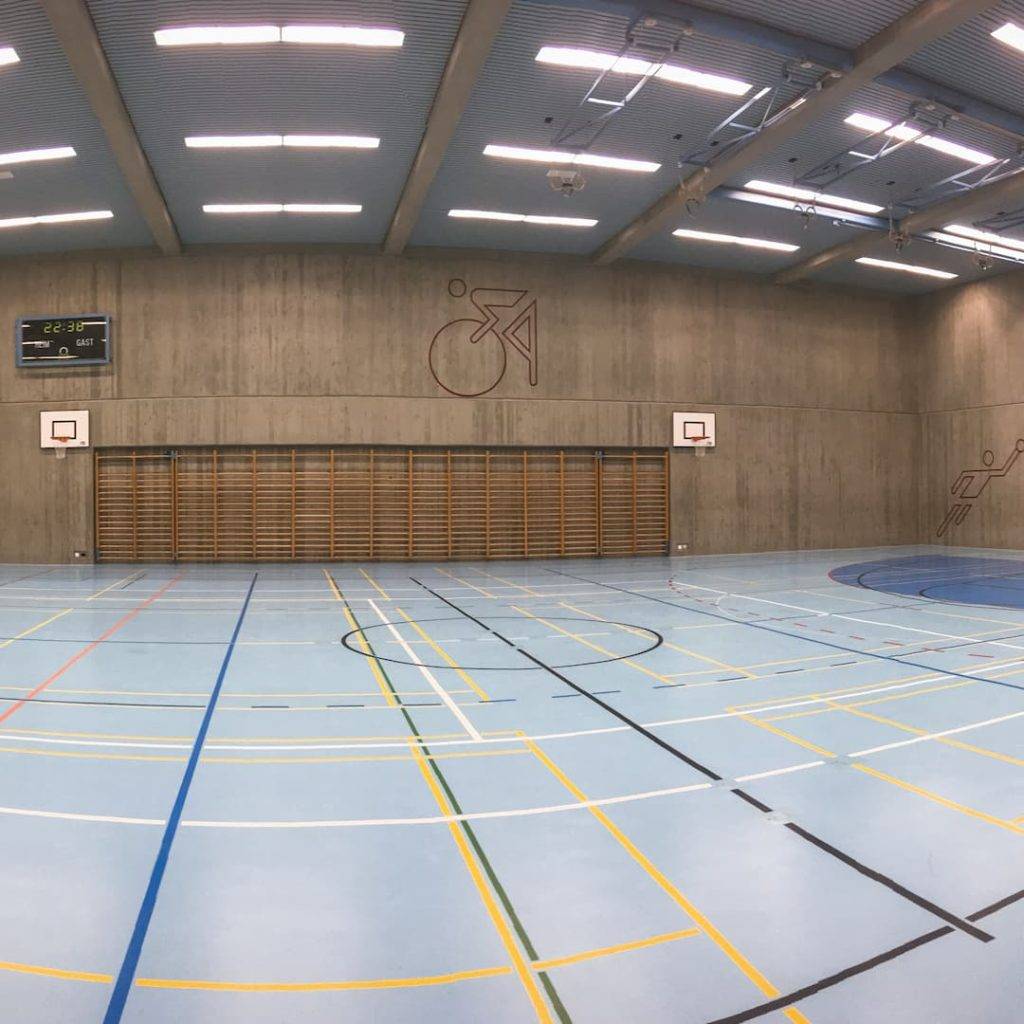
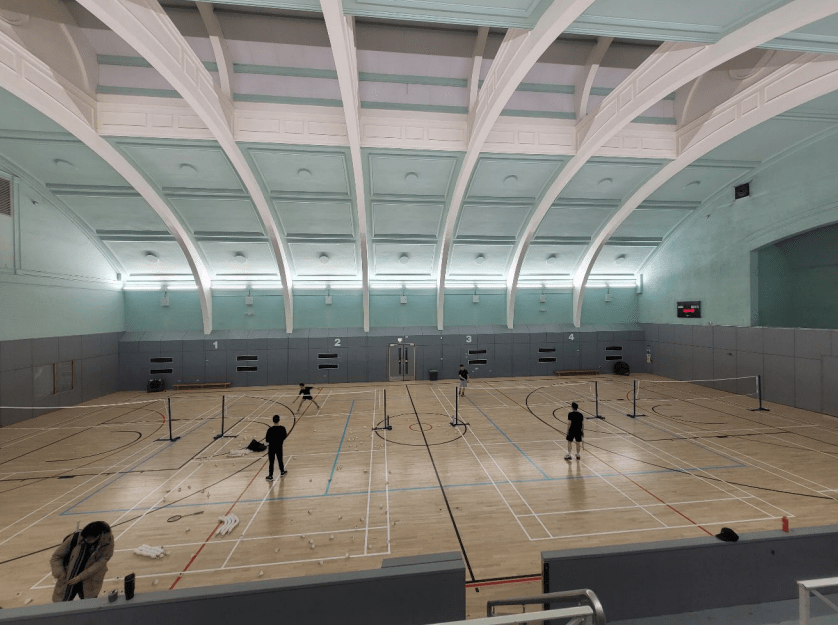
The range of building ages across the West Midlands produces an unusually wide spread of problems.
Granwood is the most distinctive. It appears in a great many older school and church halls, gets mistaken for timber and sanded accordingly, or is condemned outright and quoted for replacement. Where the blocks are sound and the bed intact, neither is necessary, and restoration with a modified epoxy system costs a fraction of replacement.
Post war sprung floors are the second group, and the common complaint is dead spots. That is a structural failure beneath the boards, and sanding the surface will not touch it.
Modern university and leisure facilities are the third, and there the wear is usually even and the question is timing. Those want catching on a maintenance cycle rather than rescuing, which is far cheaper and preserves the boards for future refinishes.
A large share of our work happens when the building is empty, because for a leisure centre or a university sports centre that is the only time the hall can be spared. Booking income stops the moment a hall closes, and members notice.
So we sand through the night in the quietest hours, seal at the end of the shift and hand the floor back walkable by opening time, with heavy equipment returning once the finish has hardened. Bank holiday weekends are useful because they give an extra day of cure.
Out of hours work costs a little more in labour and saves considerably more in lost income and disruption. We quote both ways so a manager can weigh one against the other. Keys, alarm codes and access are agreed in writing before the first night.
Foot traffic after roughly twenty four hours, full use with equipment after seventy two hours or more, and a little longer in a cold building. We state the times for the product used in writing, sign the doors and ask that they stay locked until the finish has cured.
Yes, wet and dry, at several points across the hall including the lanes where the seal wears first. The pendulum method is the one the Health and Safety Executive recognises and you receive a dated certificate that an insurer, governor or trustee will accept as evidence.
Yes. A full sand, repairs, seal and fresh markings for a typical hall takes one to two weeks plus cure time, well inside a six week holiday. Recoats and relining fit half terms. The summer diary fills by spring, so early enquiries get the dates they want.
It does when the timber is specified for heating and the system is run with a limited surface temperature and a slow warm up each autumn. Switched on at full output it dries the boards, opens gaps and can cup them, and no refinish will put that right.
Dust mop daily to lift grit, damp mop with a neutral cleaner made for sealed sports timber, and never use polish, wax or anything sold as a shine. Those build up, reduce grip and have to be stripped chemically. We hand over a one page routine with every job.
Always, from current governing body figures using laser and tape, with diagonals checked before any paint goes down. Existing lines are never traced, because copied courts drift with every remark and a surprising number of halls turn out to have unequal thirds or a short three point arc.
Every time. Moisture readings are taken in the boards and the slab at several points, because a seal over a damp floor fails no matter how well it is applied. High readings mean we find the cause and price the remedy before any finish is quoted.
Job specific method statements and risk assessments, COSHH sheets for every product, copies of public and employers liability insurance and DBS details for the team on a school site. At handover you receive product data, cure times in writing and the aftercare guidance for the facilities file.
Around the West Midlands we also work in Birmingham, Shropshire, Staffordshire, Worcestershire and Warwickshire. See all areas we cover.
Book a free survey of your sports hall floor in the West Midlands. We assess the finish, the boards and the structure beneath, then give you a fixed written price with every element itemised. Call 01823 674562 or send us a message.