
Flooring Professionals To The Leisure Industry
Courtship Flooring is a commercial sports flooring contractor working in Edinburgh and across the UK. Projects here are planned as complete visits, and a good share involve spaces serving both sport and performance from a single floor.
We are specialists rather than generalists, which after nearly forty years means a depth of knowledge on sports and commercial timber floors that a general contractor cannot match. Every stage is completed in-house. We do not quote for domestic work; Ryan’s Restorations handles that side.
Overnight/Weekend Installations
Professional Cleaning Demonstrations
Squash Court Maintenance
Recommended Cleaning Products
Professional Pendulum Slip Testing
Deep Clean & Reseal Service
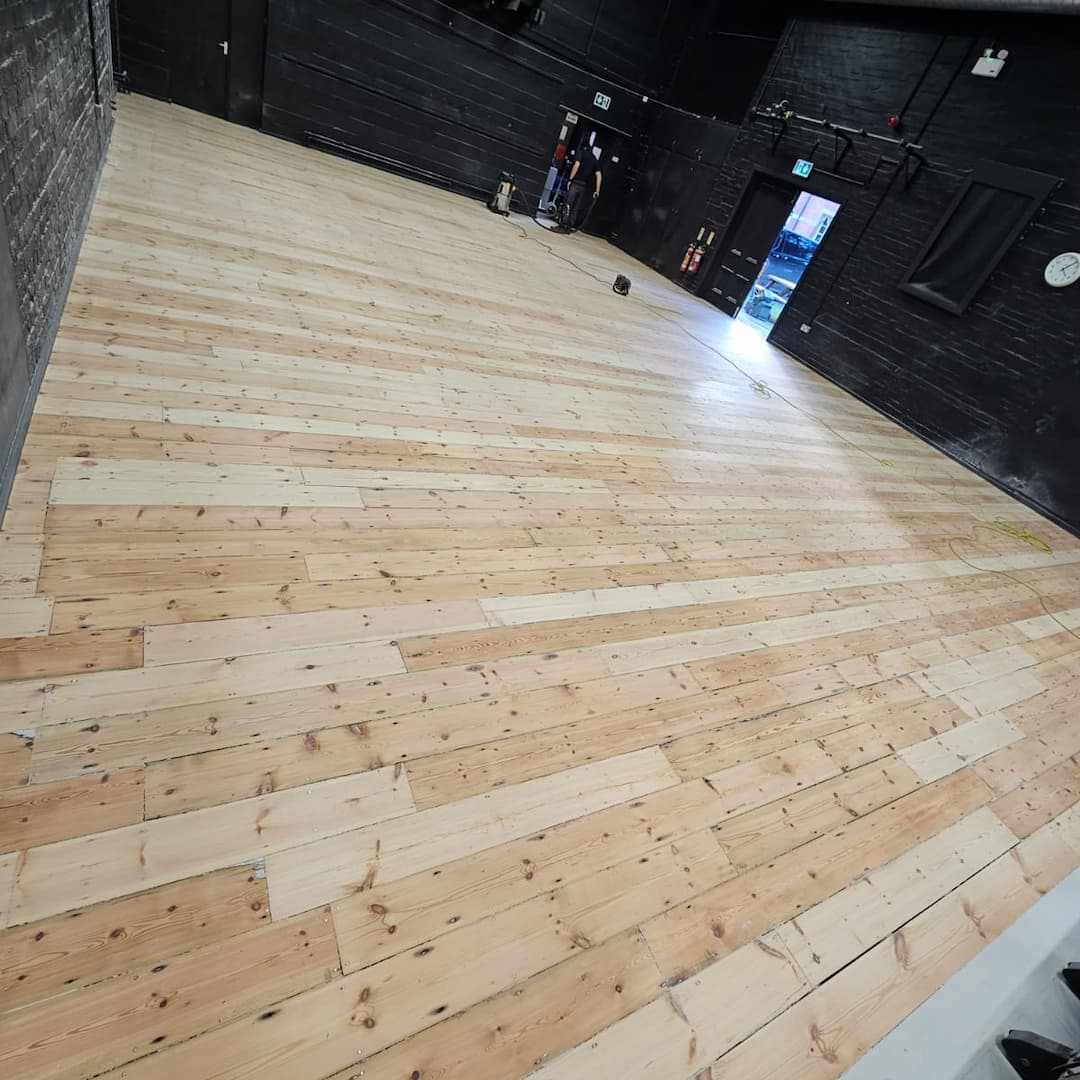
Halls asked to host both sport and performance present a genuine specification conflict. Sport wants grip and true ball response; dance wants controlled slide and generous shock absorption. A floor optimised for one compromises the other.
The workable answer is usually a sprung construction with a surface chosen to sit deliberately between the two, accepting a small compromise on each rather than a large one on either. We will explain exactly where that compromise falls before you commit.
Performance surfaces lose consistency before they look worn. Dancers notice patches of differing slide long before anyone spots a problem visually, and inconsistency is what causes falls.
Refinishing restores an even surface across the whole area, whether that means sanding and resealing a timber floor or deep cleaning and, where the system allows, treating a vinyl performance layer. We assess what you have before recommending either.


Academic calendars, performance seasons and event bookings all constrain when a floor can be closed, and those constraints rarely align. The programme therefore has to be built backwards from your calendar.
We work vacations, quiet weeks, overnight shifts and weekends, and phase larger projects so part of the space stays usable. The schedule and the reopening date are fixed in writing before anything starts.
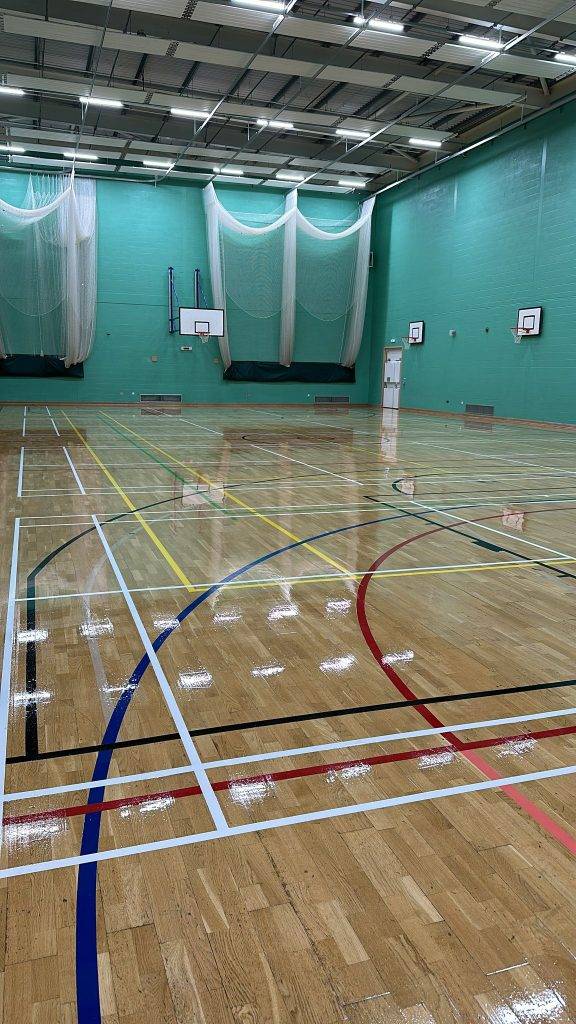
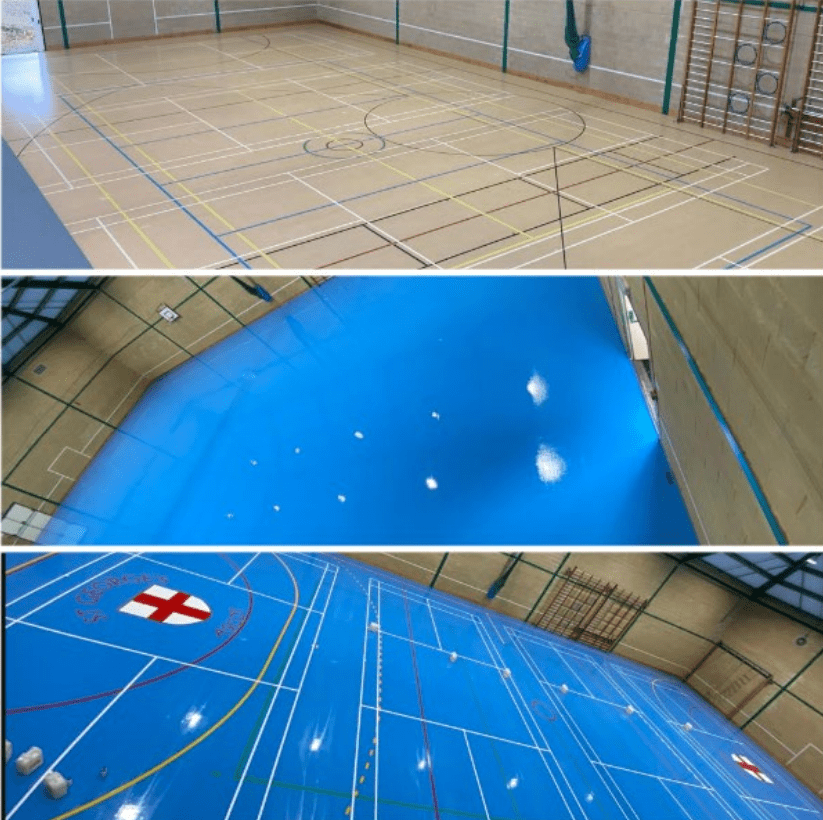
The sports hall floor at De Wint School had reached the end of its seal: grey through the middle, markings closer to guesswork than instruction, and a surface that felt slippery however often it was cleaned.
We sanded it back to clean timber, repaired what needed repairing, resealed and re-marked. The hall reopened with a deep, glossy finish that reads as newly installed, delivered inside a planned holiday window.
~ Matthew Evans
An outstanding company to deal with and they couldn’t have been better to work with. St George’s Ascot now has a stunning new sports hall floor and we are delighted. From quote, support, delivery and after sales, the Team has been brilliant. Thank you. 
~ James Anderson







Timber takes on and gives up moisture with the air around it, and a sports floor moves through the year as a result. Gaps open between boards in winter when the heating dries the hall, and close again in summer. That is normal behaviour, not a defect, and a floor with no movement at all is usually one with no expansion allowance, which is a bigger worry.
Problems come from extremes. A hall left unheated over a damp winter break swells and can lift at the edges. One heated hard and fast in September shrinks quickly enough to split boards.
Edinburgh’s older stone buildings hold damp for long periods, and the heating in them is often run intermittently. Keeping the hall between roughly forty and sixty per cent humidity, and warming it gradually, does more for the floor than any product we could sell you.
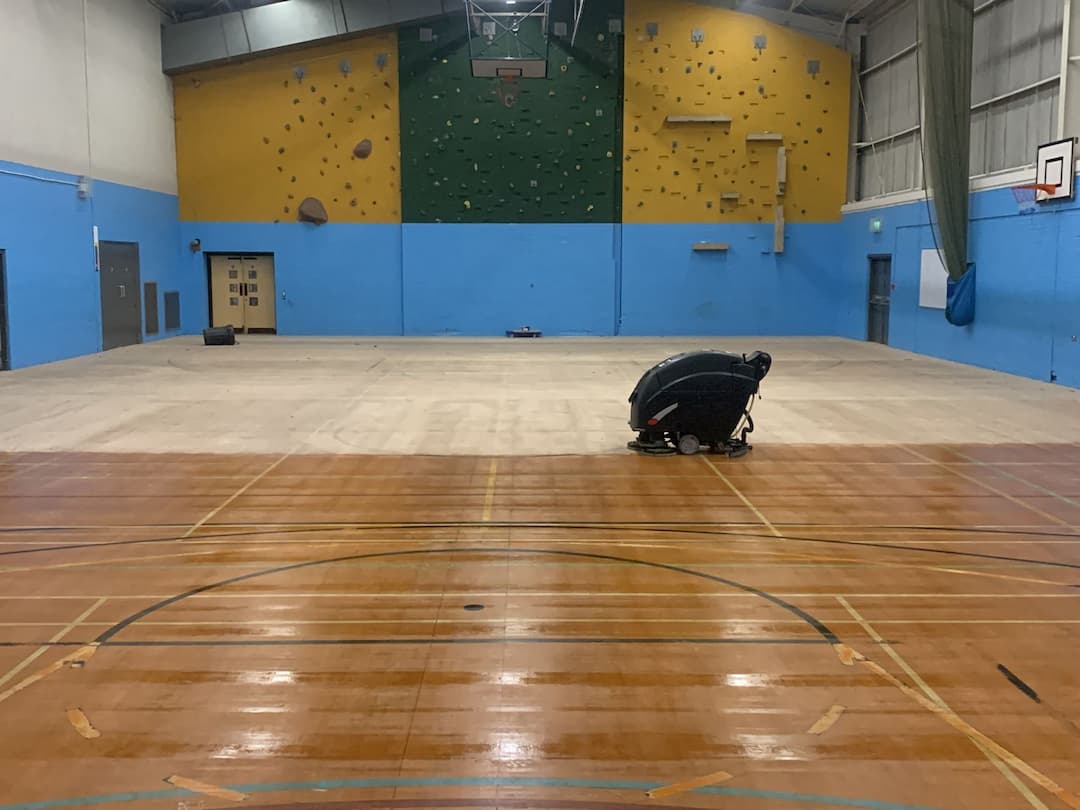
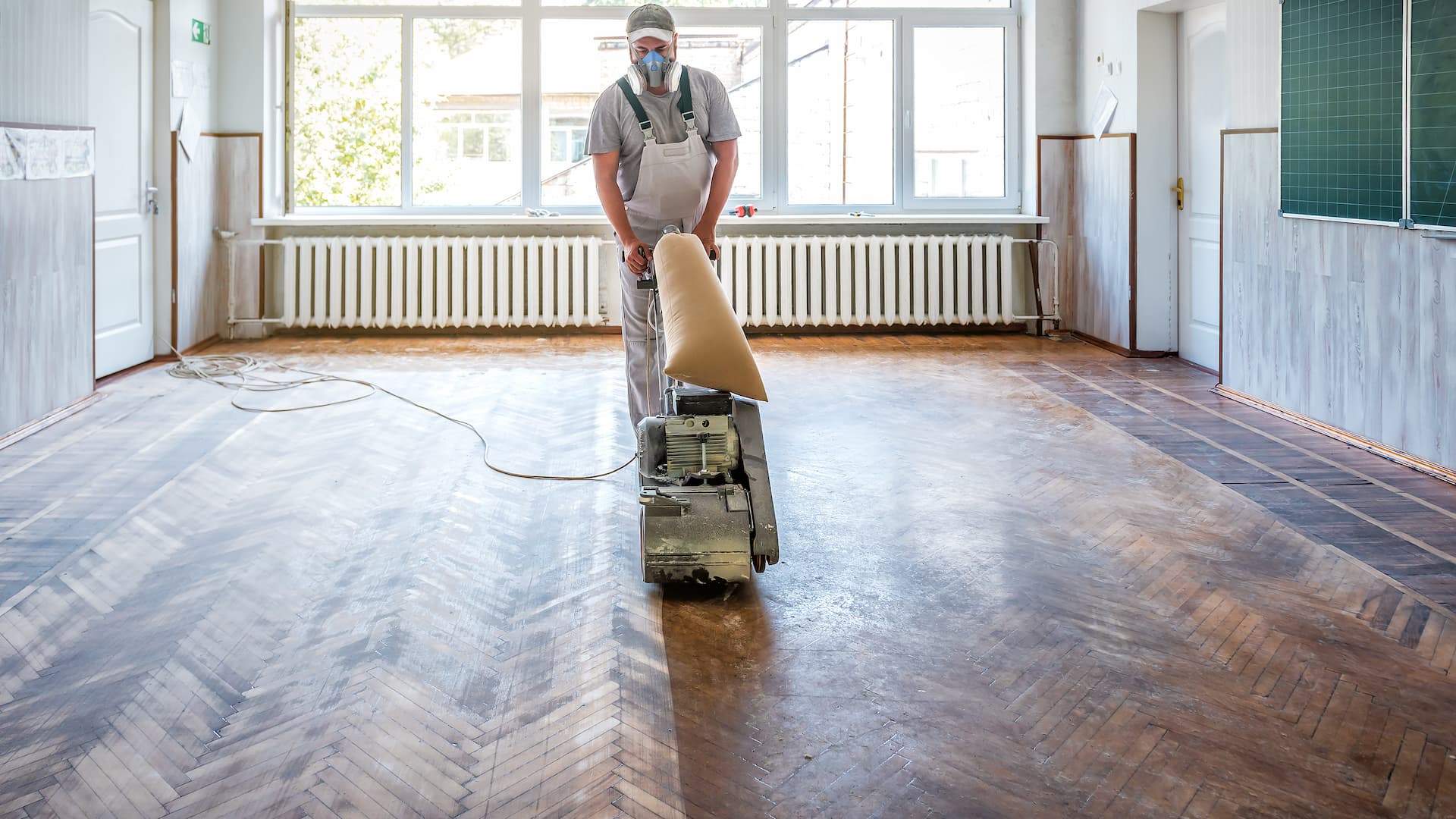
Granwood is a block made from wood flour and cement, laid in a bitumen bed in a brick pattern, and it is common in halls built between the thirties and the seventies. It looks like timber from the door and behaves nothing like it. There is no grain and almost no surface material, so a Granwood floor sanded like boards is destroyed.
The right approach is careful preparation with the correct abrasives, rebedding loose blocks, replacing broken ones, and coating the whole floor with a modified epoxy system made for composite substrates. The markings go into that system.
Two cautions. The bitumen bed in older floors can contain asbestos, so we test before any block is lifted. And most Granwood we are asked to look at in Edinburgh has been condemned by somebody who did not recognise it, when a sound bed and intact blocks mean it can be restored for a fraction of replacement.
A condition inspection is the cheapest piece of floor work we do and the one that saves the most money. We walk the floor, measure the seal depth and the timber left above the tongue, take moisture readings, check for movement and dead spots, review the markings and fittings, and photograph the defects.
What you receive is a written report that ranks the findings: what needs attention this year, what can wait, and what needs nothing beyond the cleaning routine. Each item carries a cost, so the report can go straight into a budget paper.
For an Edinburgh independent school or a university estate with several halls, studios and courts, an inspection across all of them produces a phased programme rather than a series of emergencies. It also gives a head of estates something to hand on when the role changes.

The most damaging fortnight in a school hall’s year is the exam season. Several hundred desk feet, chairs dragged into rows and invigilators pacing the same lanes leave marks that sport would take years to make. Events do the same with staging, seating trolleys and catering equipment on small hard wheels.
A purpose made protective covering laid before the furniture arrives stops nearly all of it. It rolls out in an hour, lifts just as quickly, and stores on a rack when not in use. The cost is small against a single repair visit.
Edinburgh halls used for festival season hire take more of this than most, and it is worth having the covering in place before the first booking rather than after the first complaint. We advise on the right grade for the loads involved and on handling it so the covering itself leaves no marks.
Edinburgh gives us a strong weighting towards university and independent school sport, alongside the city leisure estate.
University facilities are busy across the full year, and the summer is filled with conferences, festival related use and external hire rather than standing empty. That makes the working window narrow and fixed, and it is why these projects are planned months ahead and staffed to finish inside it rather than stretched.
Independent school sports halls, gymnasia and squash courts are the second strand. Expectations of finish quality are high, the work goes into fixed holiday windows, and a good proportion of it is preventative screen and recoat rather than full refinishing, which is the cheapest way to run a floor.
Council leisure centres and community sports facilities follow, where booking income means most work happens overnight or across an agreed quiet period.
Squash courts feature more here than in many cities, and they need a matt high grip specification rather than a general sports lacquer. A court polished smooth through the middle is a genuine injury risk, not merely an inconvenience.
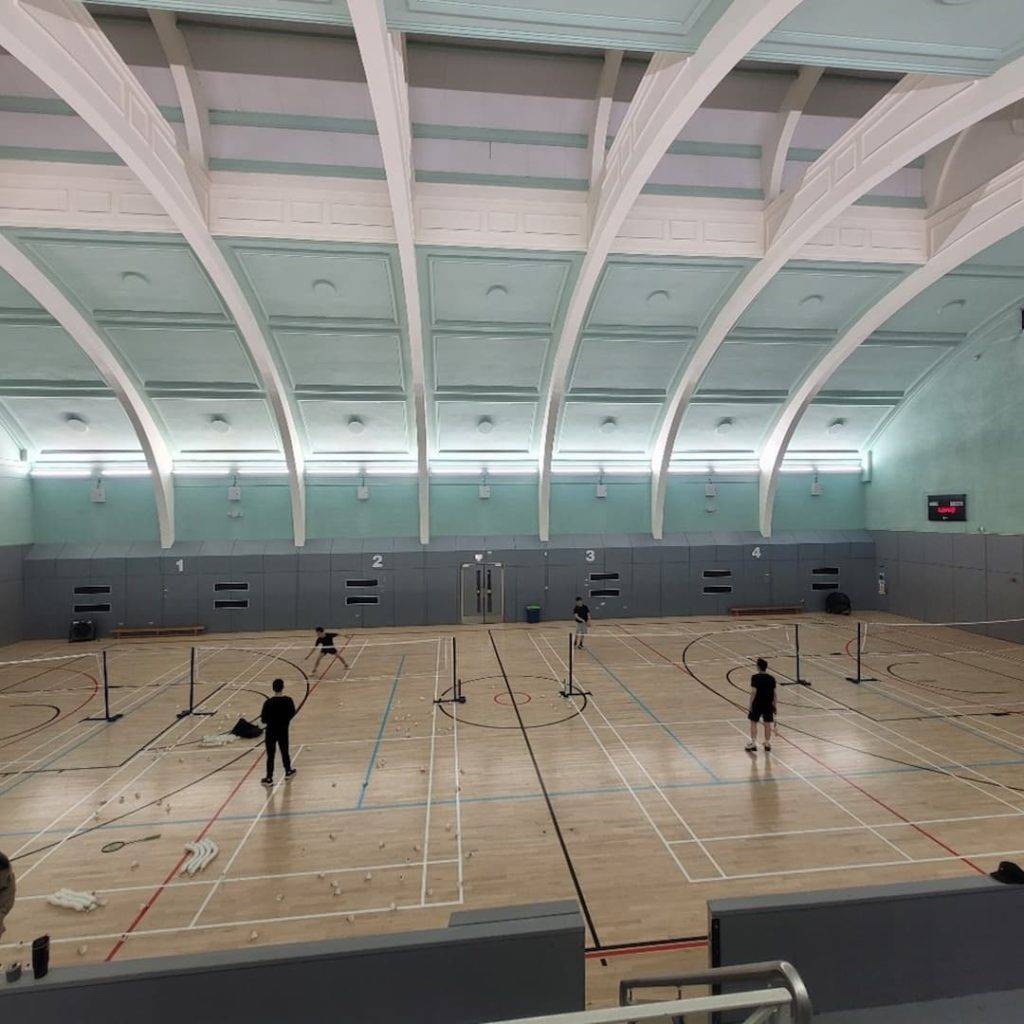
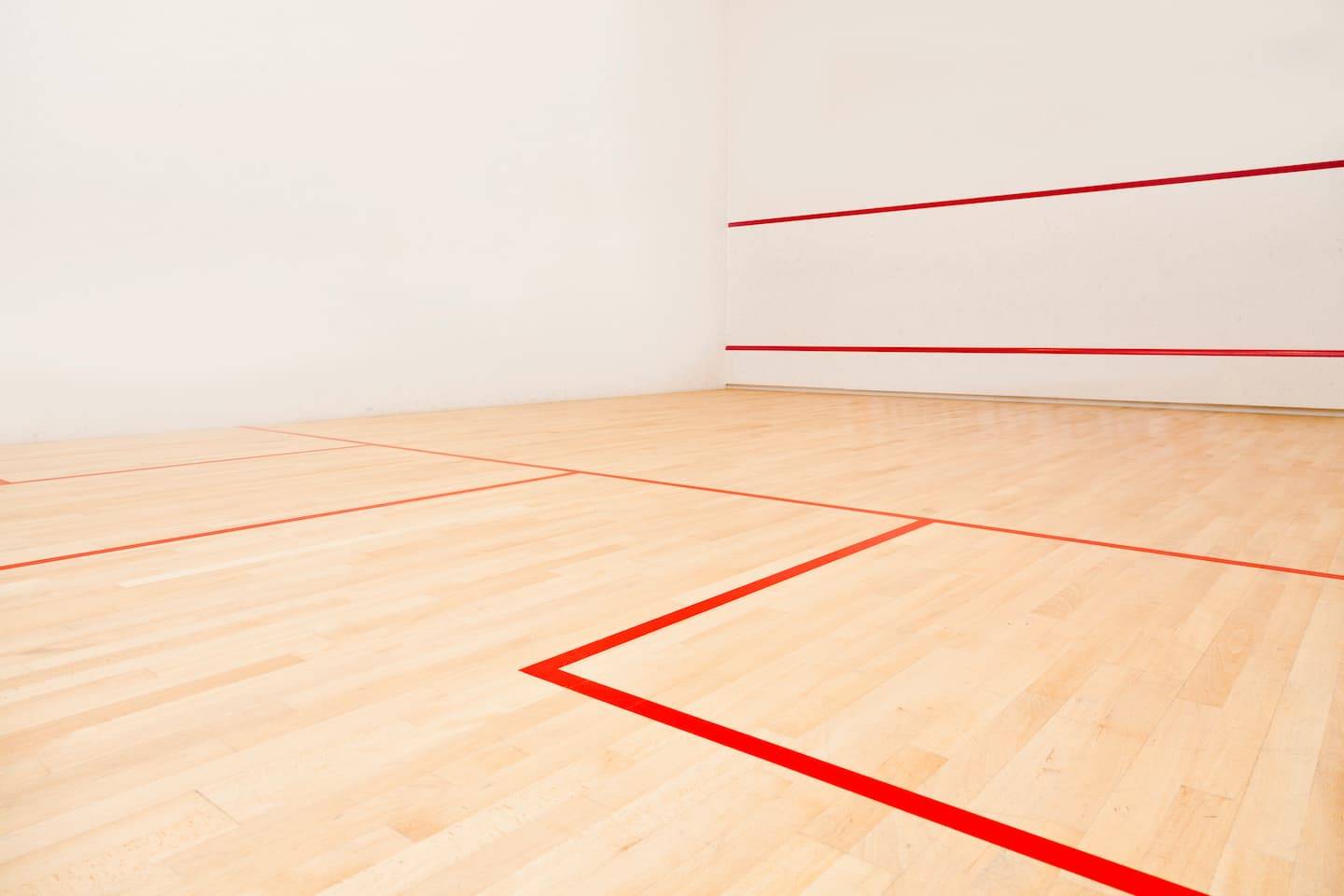
Edinburgh enquiries cluster around a few recurring issues, and squash features more prominently here than in most cities.
Slippery squash courts are a regular call. The constant return to the T polishes the finish smooth through the centre while the front and back still look fine, and it is a genuine injury risk rather than a comfort complaint. A matt high grip reseal restores it properly.
The second is independent school halls where the finish is dulling rather than worn. Those want a screen and recoat, not a full sand, and saying so preserves the boards for future cycles.
The third is university facilities working to very narrow windows. The technical work there is routine; the difficulty is programming, and it is solved by surveying early, ordering materials in advance and staffing the job to finish inside the window rather than hoping it stretches.
We have traded since 1987, and a firm lasts that long in this trade only by putting right anything that goes wrong. Because our own team carries out every stage, from survey to marking, one guarantee covers the whole system. There is no gap between a sander’s warranty and a sealer’s warranty, and no argument about whose fault a defect is.
The guarantee terms are written into the quotation, so you know before you sign what is covered and for how long. Materials are covered by the manufacturer, workmanship by us.
What we ask in return is that the aftercare guidance is followed, because a floor cleaned with polish or flooded with a scrubber drier fails for reasons no contractor can prevent. If a problem does appear, one call brings the same people who did the work back to your hall in Edinburgh.
It depends on the area, how much timber remains, the markings required and whether you need overnight or holiday working. We survey without charge and give a fixed, itemised quotation, so the budget figure you take to your finance committee is the final one.
We work throughout Scotland, from the Borders to the Highlands, and across the rest of the UK. Our team travels with its own machinery, and travel and accommodation are shown as a separate line in the quotation rather than absorbed into the rate.
Yes. Send a few photographs of the whole hall, close ups of the worst areas and the floor edge, with the approximate dimensions, and we will tell you what the floor probably is and what it is likely to need. A fixed price always follows a site visit.
A failed pad, cracked batten or dropped cradle beneath the boards. The surface stops flexing with the rest of the floor and feels lifeless underfoot. The repair is local, lifting the boards over the area and replacing the components, and no amount of sanding fixes it.
A full sand, reseal and remark of a typical hall takes five to seven working days, then twenty four hours before light foot traffic and seventy two hours or more before equipment. A screen and recoat takes two days plus cure. Dates are fixed in writing.
Yes. Where an estate has several floors, or one large floor can be split by area, we phase the programme to match your budget years. The survey report ranks what cannot wait against what can, so the phasing is based on condition rather than guesswork.
Yes. We install timber area elastic and point elastic systems, sports vinyl, linoleum and polyurethane, and we advise on which suits the room and the users. If your existing floor is worth keeping we will say so, because restoration usually costs far less.
Yes. Most of our leisure and university work runs overnight or at weekends, with the floor walkable by opening time and heavy equipment held off until the seal has hardened. Overnight rates are shown separately so you can compare them with a daytime closure.
We work across the east and north of Scotland too, including Fife, Perth, Dundee, the Scottish Borders and the Highlands. See all areas we cover.
Book a free survey of your sports hall, studio or squash court floor in Edinburgh. We assess it, explain what it needs and give you a fixed price with a firm finish date. Call 01823 674562 or send us a message.