
Flooring Professionals To The Leisure Industry
Courtship Flooring is a commercial sports flooring contractor working in Liverpool and across the UK. Much of our work involves multi-use halls where the sport is only part of what the room is asked to do.
A family business established in 1987, working exclusively on commercial indoor sports and timber floors. We survey, install, restore, mark, test and maintain, keeping every stage in our own hands so one warranty covers the whole system. Domestic work is handled separately by Ryan’s Restorations.
For halls in Liverpool that are worn but structurally sound, our sports hall floor refurbishment service restores grip, appearance and line markings, usually within a school holiday.
Overnight/Weekend Installations
Professional Cleaning Demonstrations
Squash Court Maintenance
Recommended Cleaning Products
Professional Pendulum Slip Testing
Deep Clean & Reseal Service

In most buildings the sports hall is also the assembly space, the dining room, the exam venue and the events room. Specified purely as a sports floor, it will disappoint within two years, because the damage rarely comes from sport.
Chair legs, table trolleys, stacked staging and desks cause the indentation and scuffing we spend most of our repair time on. We account for that at specification stage, choosing finishes tough enough for furniture while still delivering the grip and shock absorption activity requires.
The cheapest floor protection available is a covering laid over the playing surface for non-sporting use. It takes the punishment from desks and chairs during exam season, protects against spillage at events, and lifts quickly afterwards.
The cost is a fraction of repairing the damage it prevents, yet it is routinely skipped. We advise on the right type for your surface and how to store and handle it so the covering itself does not cause marking.

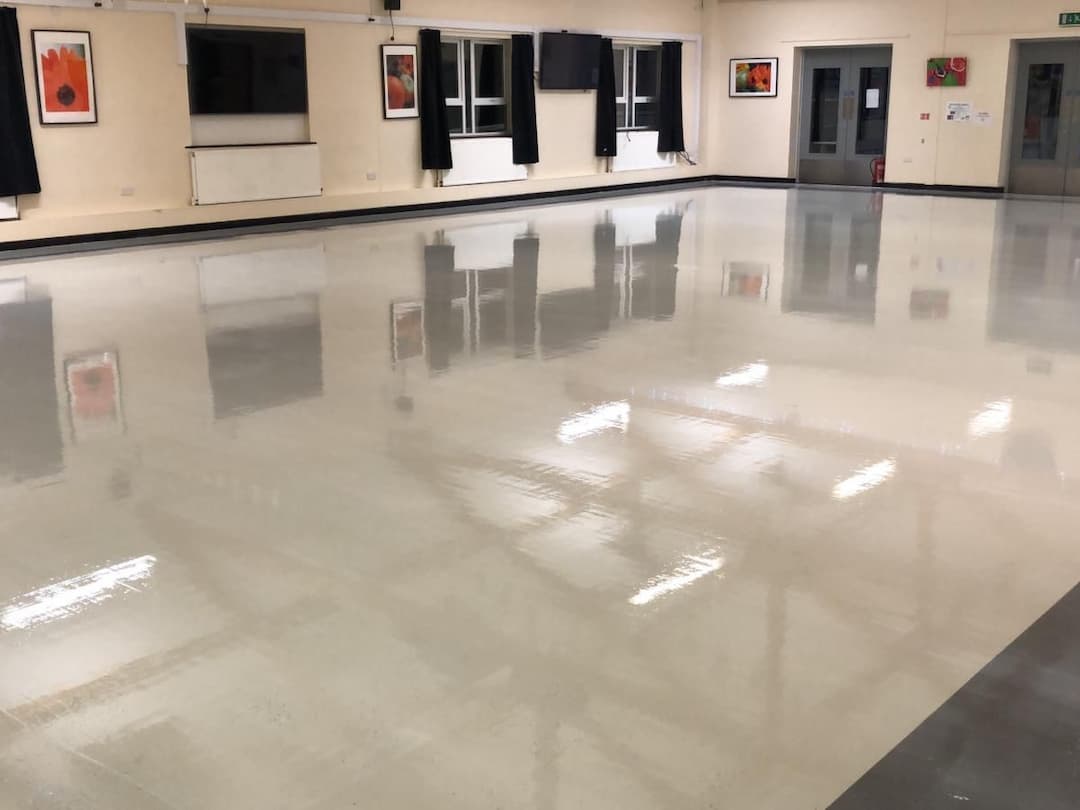
Most floors we are called back to have been damaged by cleaning rather than use. Over-strength product, incorrect pH and hard water leave a residue that dulls the surface and reduces grip, and the usual response is to clean harder.
We demonstrate the correct routine to your own team, recommend products suited to the floor and the local water supply, and provide written guidance. It is the single cheapest thing any facility can do to extend the life of a finish.
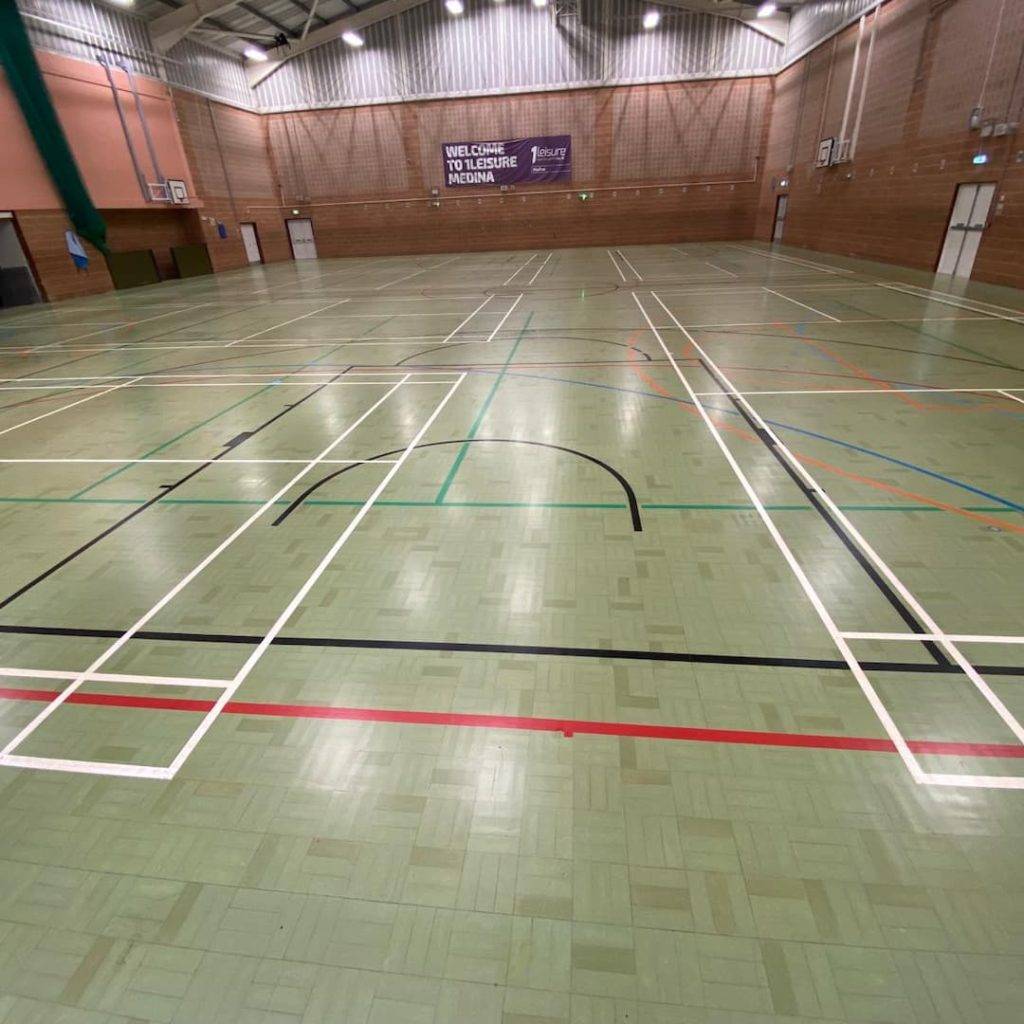
At Medina Leisure Centre we refurbished the main sports hall floor completely: sanding, repairs, resealing and a full set of new markings, with the logistics planned down to the last detail so the centre lost as little bookable time as possible.
The after photographs show a hall transformed, and the programme finished on the date agreed at the outset.
~ Matthew Evans
An outstanding company to deal with and they couldn’t have been better to work with. St George’s Ascot now has a stunning new sports hall floor and we are delighted. From quote, support, delivery and after sales, the Team has been brilliant. Thank you. 
~ James Anderson







A slippery floor is the one complaint that carries real liability, and it is also the one that can be measured. We test to BS 7976-2 with a pendulum, taking readings in several positions and in both directions so a floor that is fine at the edges and glassy through the centre does not pass by accident.
You receive a written report with the values, the positions and a plain statement of whether the surface meets the accepted threshold for sports use. That certificate matters to a leisure trust in Liverpool defending an insurance claim, and it matters just as much to a school that wants evidence before a governor asks.
Where a floor fails, the cause is usually polish residue or a seal worn smooth, and we set out the remedy alongside the result rather than leaving you with a number and no next step.
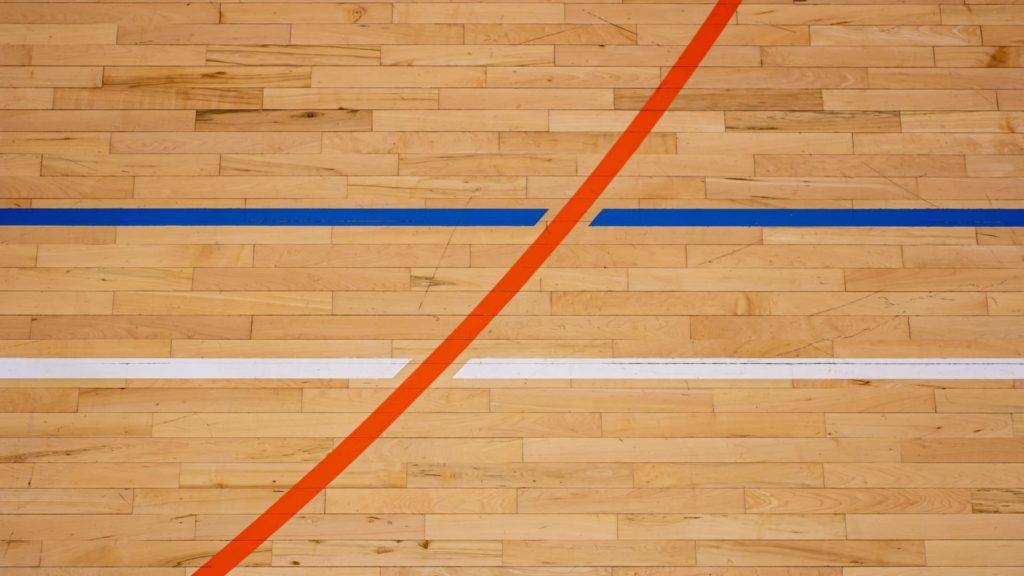

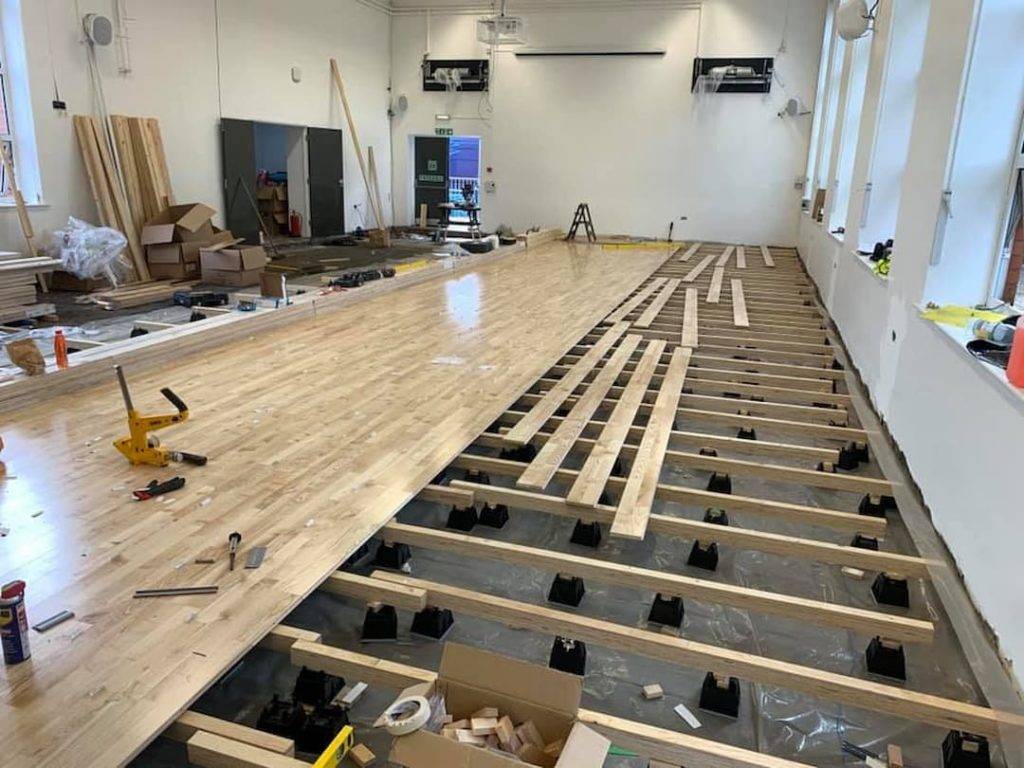
Timber sports floors are built one of two ways. An area elastic system sits on battens or cradles with resilient pads beneath, and the whole floor flexes together when a player lands. A point elastic system deforms only where the load falls, which suits a thinner build over a slab where height is limited.
BS EN 14904 sets the performance each type has to reach for shock absorption, vertical deformation, ball rebound and friction. We specify against that standard and against the room, because a hall taking basketball and a studio taking contemporary dance want different responses underfoot.
Many of the older halls around Liverpool were built with battened floors decades ago, and most are still sound. Knowing which system you have is the starting point for any sensible repair or refinish decision, and we identify it at survey.
Water finishes more sports floors than wear does. A slab poured before modern damp proofing was standard lets vapour rise into the boards, and the first sign is cupping along the edges or a finish that clouds and peels from below.
We take moisture readings in the timber and at the slab before we quote, because sealing a floor that is still taking on water only hides the problem for a year. Where readings are high we specify a barrier and explain what it adds to the programme. Where they are fine we say so and leave it out.
Liverpool’s Victorian and inter war school stock, and buildings close to the river, give us more of this than average. A survey that includes moisture is the difference between a refinish that lasts a decade and one that fails in eighteen months.
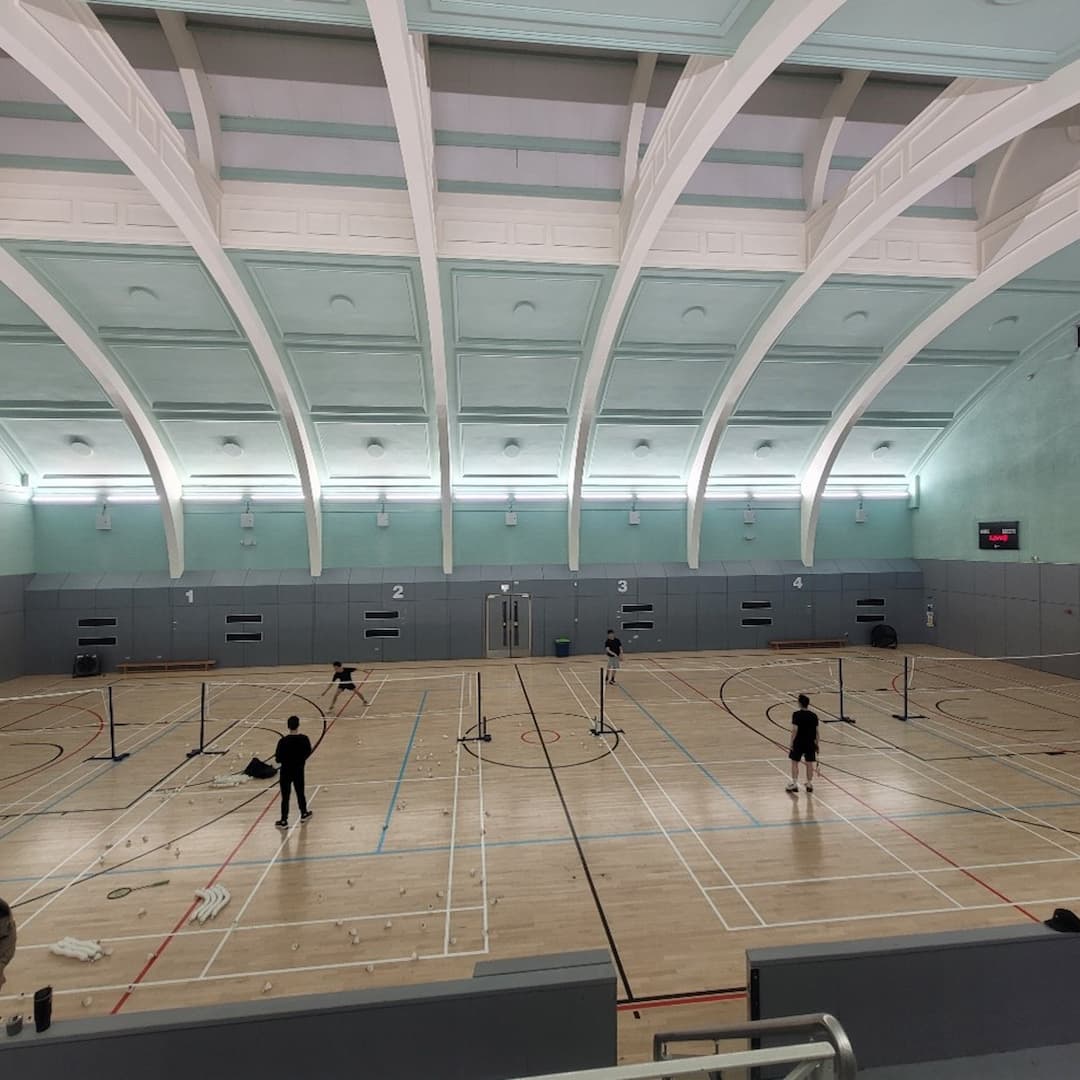
For a leisure centre the true cost of floor work is the income lost while the hall is shut, so the programme is designed around trading hours first and the flooring second. Most of what we do for operators in Liverpool happens overnight, with the floor walkable by opening time and the heavy equipment held off until the seal has hardened.
We split large halls where the layout allows, keeping courts open at one end while the other is sanded, and we book the marking and final coat for the quietest night of the week.
The other thing operators need is a date they can publish. Bookings are cancelled weeks ahead, so a finish that slips by two days costs far more than the two days. Our programme is fixed in writing before we start, and we staff the job to hold it.
Liverpool gives us a wide mix, with university sport, academy trust estates, city leisure facilities and a considerable amount of older building stock.
University and college facilities are busy across the full year, with summer conference and external use filling what would otherwise be a shutdown. The windows are narrow and fixed, and those projects are planned well ahead and staffed to complete inside them.
Academy and school halls are the largest group by number. Many date from the nineteen sixties and seventies with sprung timber floors that are structurally sound but overdue a refinish. Those are almost always better restored than replaced, and a proper survey usually finds considerably more life left than the school has been told.
Leisure centres and community sports facilities follow, where keeping the building trading means overnight working.
Granwood appears regularly in the older school and church halls here. It needs a specialist approach rather than timber sanding, and most of the Granwood floors we are asked to look at are worth saving.
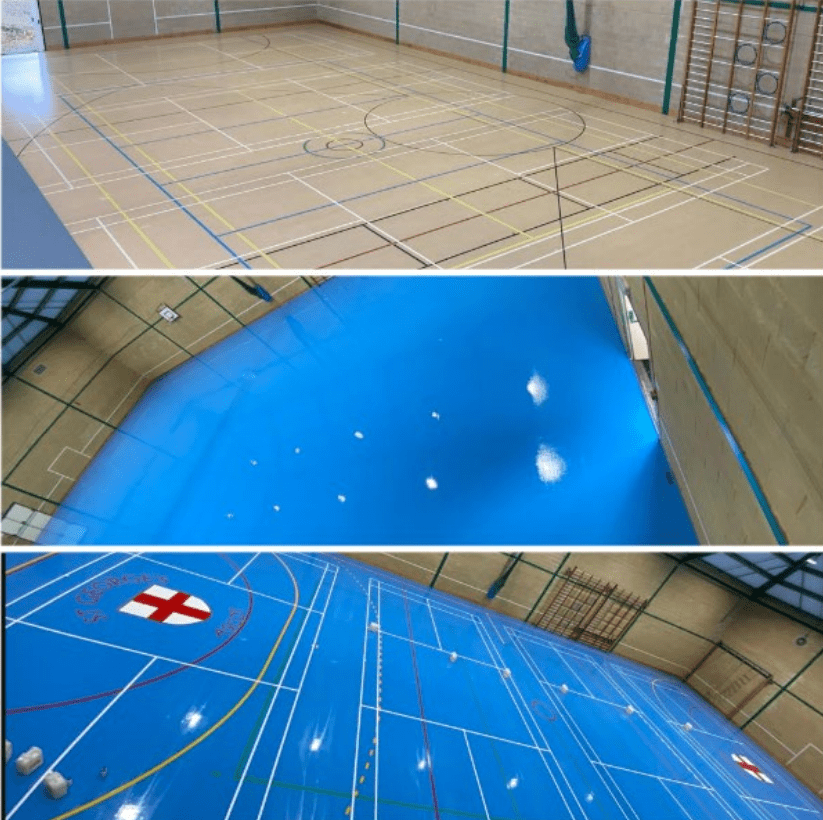
Liverpool has a wide spread of building ages, so two projects usually cover the ground.
For older school and church halls, St George School in Ascot is the important one. That hall had a Granwood floor condemned by others as beyond saving. Granwood is a composite block in a bitumen bed, not timber, and it needs specialist preparation and a modified epoxy coating rather than sanding and lacquering. We rebedded, replaced the broken blocks and coated it properly. The floor has years left at a fraction of replacement cost.
For academy halls, Harris Academy is the closer comparison: constant curriculum use, a finish long overdue, a fixed term date, and markings reset from measured dimensions with redundant sports removed.
For university facilities, Aston University is the parallel, where the difficulty was a year round timetable with no genuine summer shutdown.
Working inside schools, universities and council buildings means paperwork, and we send it before anyone asks. Method statements and risk assessments are written for your site, not lifted from a template. COSHH data covers every seal, adhesive and cleaner we bring in. Our public and employer’s liability certificates are supplied with the quotation.
On school sites the team carries enhanced DBS certificates and works within your safeguarding arrangements, signing in and staying inside the agreed area. Where a project falls under CDM we take on the duties that come with it.
Liverpool’s academy trusts and the city’s leisure providers each have their own compliance forms, and we complete them as part of the job. A contractor who treats the documentation as a nuisance tends to treat the site the same way, and you can usually tell within the first morning.
It depends on the area, the depth of timber remaining, the number of markings and the working hours you need. A full sand, reseal and remark of a typical school hall is priced after a free survey, with every item shown so you can see what drives the figure.
Yes. We cover the whole of Merseyside and the wider North West, and we travel nationally. Travel and accommodation are shown as their own line in the quotation rather than hidden inside the rate, so the price you approve is complete.
A standard secondary school hall usually takes five to seven working days including sanding, repairs, sealing and marking, followed by cure time. Larger halls and floors needing structural repairs take longer. We give a fixed programme with the quotation.
Yes. Our sanders run on dust extraction, the hall is sealed off, and the noisy stages are scheduled around lessons or bookings where that matters. Many of our Liverpool projects run in occupied buildings with teaching continuing next door.
Every two to three years for a busy hall, before the seal wears through to bare timber. A screen and recoat takes a couple of days and costs a fraction of a full sand, which most floors then need only around once a decade.
Yes. On timber the old lines come off during sanding and only the sports you actually play go back on. On synthetic surfaces we remove redundant lines with the appropriate process. Fewer markings make a hall clearer and easier to officiate.
Yes, and it is worth doing both in one visit. Stages usually carry more damage than the hall floor from scenery and staging, and one mobilisation costs far less than two while giving the same finish across both surfaces.
No. Courtship Flooring works only on commercial sports and timber floors for schools, universities, leisure operators, clubs and councils. Domestic sanding and restoration is handled by our sister company, Ryan’s Restorations, and we can pass your details across.
From the north west we also travel to Belfast, Northern Ireland, Cheshire, Lancashire and Sheffield. See all areas we cover.
Book a free survey of your sports hall floor in Liverpool. We measure the floor, tell you plainly what it needs and give you a fixed price with a firm finish date. Call 01823 674562 or send us a message today.