
Sports hall floor repairs deal with the damage that a deep clean or a fresh coat of seal cannot fix: boards lifted by a roof leak, dead spots where the floor has stopped responding, squeaks from failed fixings, torn or split vinyl, and loose Granwood blocks. Courtship Flooring has repaired indoor sports floors since 1987, cutting out damaged sections and replacing them with matching material so the repair disappears into the finish.
Every repair starts with finding the cause. Water damage from a gutter that still leaks, or movement caused by poor sub-floor ventilation, will come back if only the boards are replaced, so we identify the cause first and tell you plainly what needs putting right. Once the repair is complete we blend it in with local sanding and sealing, renew any line markings that were disturbed and confirm grip with a pendulum slip resistance test.
If the whole floor is worn, not just damaged in places, a full sports hall floor refurbishment is likely to be better value. Granwood and composite block floors can also be restored with our modified epoxy coating systems, and our maintenance plans help stop small problems becoming repairs. Family-run, nothing subcontracted, and happy to work overnight or through the holidays.
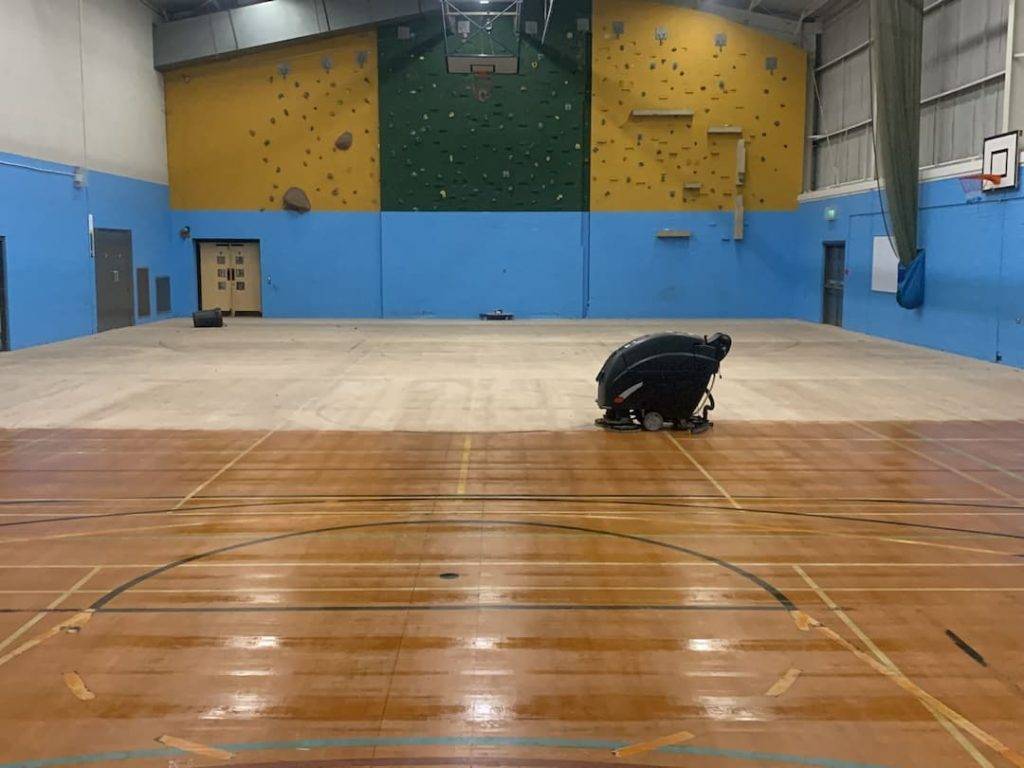
Some damage is obvious. Some only shows up when a ball dies on a particular spot or a player catches a raised edge. Common signs that a floor needs repair, not just routine maintenance, include:
A repair is usually one stage of a bigger job. On timber floors we cut out the damaged boards, check the battens or cradle system underneath, replace anything that has failed and fit new boards of the same species, width and profile. The new section is then sanded and sealed to match the surrounding floor, and any lines that crossed the repair are re-marked.
Where the rest of the floor is in good order, that is the end of it. Where the repair reveals a floor that is worn throughout, it often makes sense to combine the repair with a full sand and seal in one visit, so you close the hall once instead of twice.
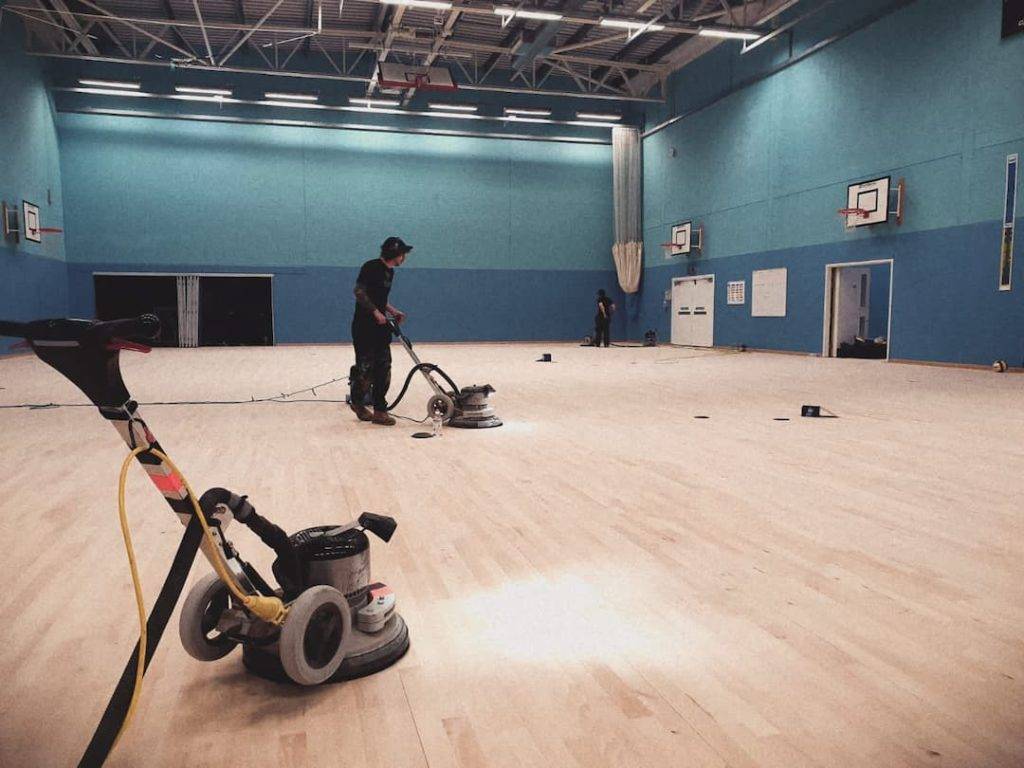

We start with a survey: moisture readings in the boards and the sub-floor, a check for movement and hollow areas, and a look at how the floor was built. That tells us whether the problem sits in the surface, the boards or the structure beneath, and it means the quotation covers the actual cause.
Small repairs, such as replacing a handful of boards or re-fixing a squeaking area, can often be completed in a day or overnight. Larger areas of water damage take longer, because a wet sub-floor has to dry before new timber goes down; laying boards over damp construction simply repeats the failure. We agree the programme in writing before we start, including when the area can take foot traffic and when play can resume.
A leak onto a timber sports floor is a race against swelling. Stop the source if you can, remove standing water with wet vacuums or squeegees, and keep the area closed: lifted or cupped boards are a trip hazard and are easily damaged further by play. Ventilate the hall, but avoid aiming heaters at the floor, which dries the surface faster than the boards below and can make cupping worse.
Photograph the damage for your insurer and call us early. We take moisture readings across the affected area and the surrounding floor, which shows how far the water has travelled. Some boards recover as they dry and need only sanding and sealing; others have to be cut out once the sub-floor is dry. Making that decision too early is a common reason repairs fail.
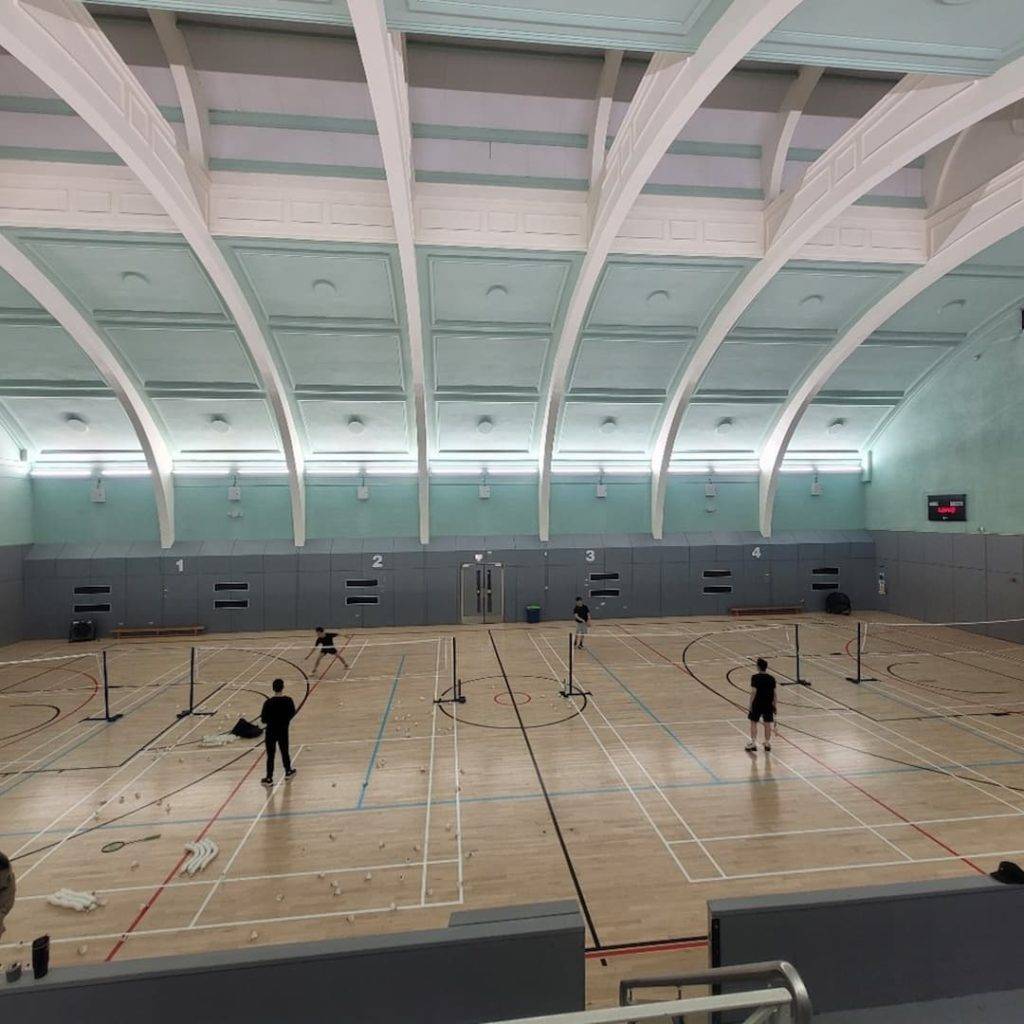
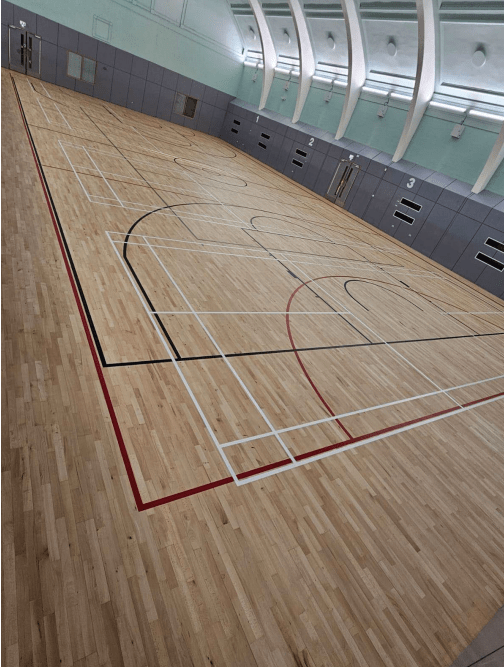
Our case studies from Aston University in Birmingham, Liskeard Leisure Centre in Cornwall and Treguib in South Wales show the standard of finish we work to. Each project began with a survey of the existing floor, so anything that needed repairing was found and priced before work started, not halfway through.
Not every repair needs the whole floor sanding. A repair within a sound floor can be blended in locally: the new boards are sanded flush and sealed in matching lacquer, and the surrounding area is lightly abraded and recoated so the join does not show.
If the lacquer across the floor is worn but intact, a screen and recoat after the repair refreshes everything for a fraction of the cost of a full job. Only where the seal has broken through and the timber itself is wearing do we recommend a full sand, because every sand removes wood that cannot be put back. We measure how much board remains above the tongue and tell you which option your floor needs.
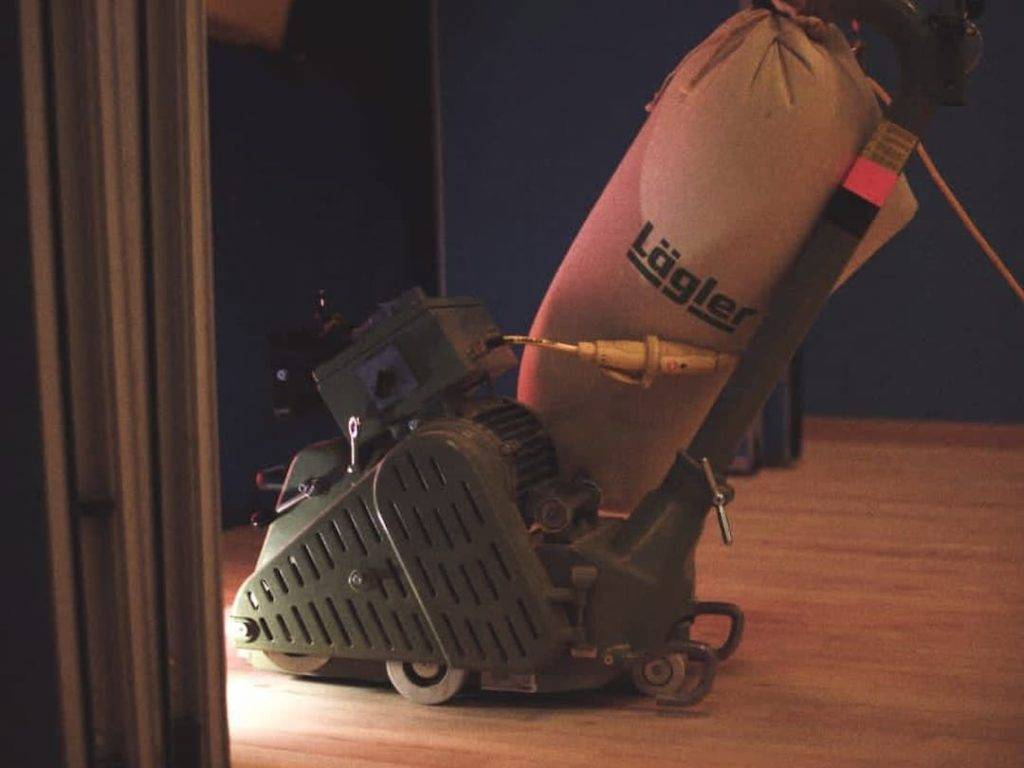
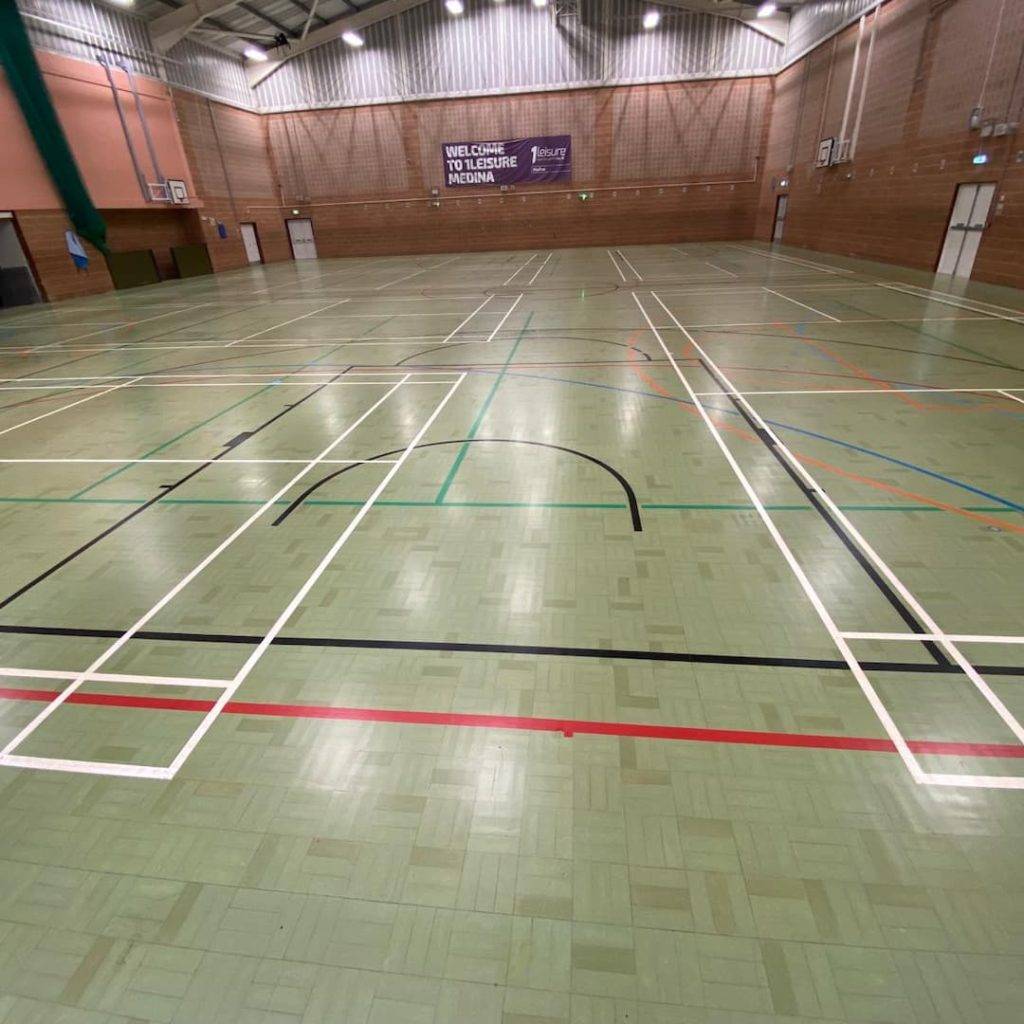
Most damaged sports floors can be repaired, but not all of them should be. The decision usually comes down to three measurements: how much of the floor is affected, how much wear layer remains above the tongue, and whether the sub-floor beneath is sound and dry.
A few square metres of water damage in an otherwise healthy floor is a repair. Damage across a large part of the hall, boards already sanded close to the tongue, or a sub-floor with a persistent moisture problem usually point towards replacement, because repeated repairs will cost more over the remaining life of the floor than starting again. Where that is the case, we explain why with the survey readings in front of you and price a new sports hall flooring installation alongside the repair, so you can compare the two properly.
Old floors keep secrets. Once the surface comes back we regularly find water damage tracked from a long-forgotten roof leak, boards lifting where a sub-floor has moved, bitumen bleeding up through a 1960s parquet, or previous repairs done in the wrong timber entirely.
None of it is unusual and almost all of it is fixable, but it is the reason we survey properly before quoting rather than pricing from a photograph. Localised water damage can be cut out and replaced with matching boards so the repair disappears into the finish. Movement and squeaking usually trace back to fixings or sub-floor ventilation rather than the boards themselves.
Where something genuinely cannot be saved, we say so and price the alternative honestly. What we will not do is seal over a problem so it becomes yours again in eighteen months.
Vinyl and PU sports floors cannot be sanded, but they can be repaired. Open or failed welds are cleaned out and re-welded, and torn or burnt areas can be cut out and replaced with a matching insert where the material is still available. Granwood blocks that have come loose or cracked are lifted and reset or replaced, then the floor is brought back together under a specialist coating, because sanding would destroy the blocks.
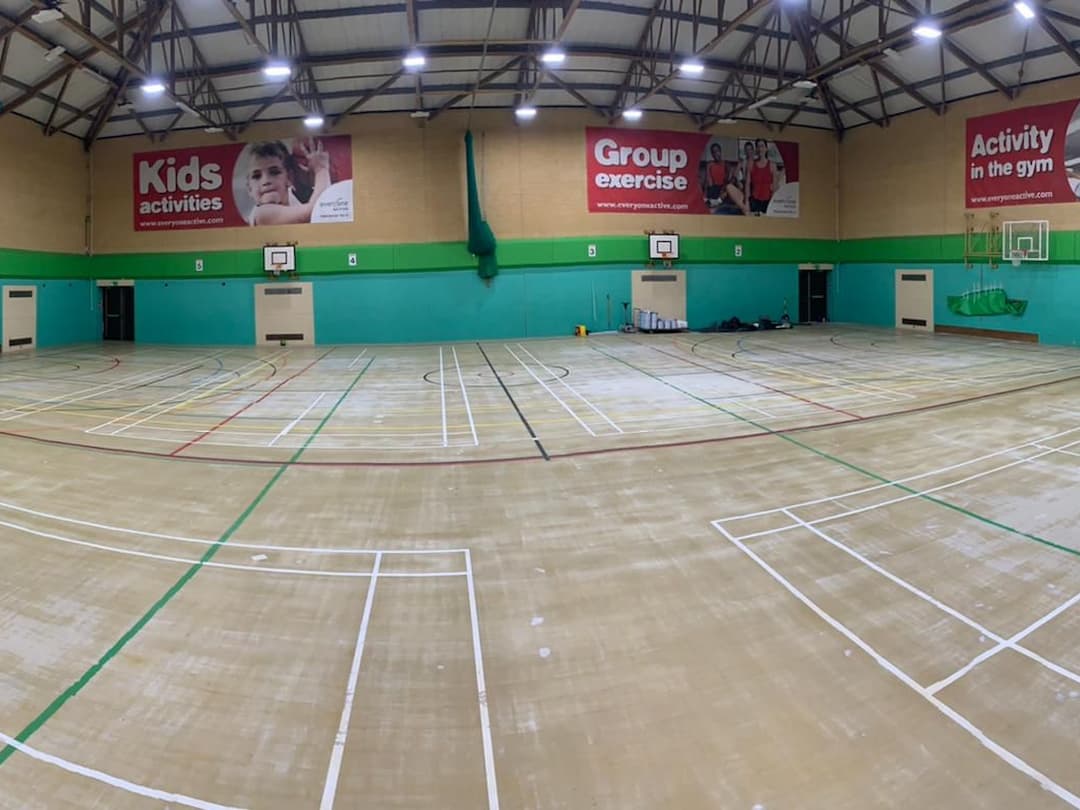
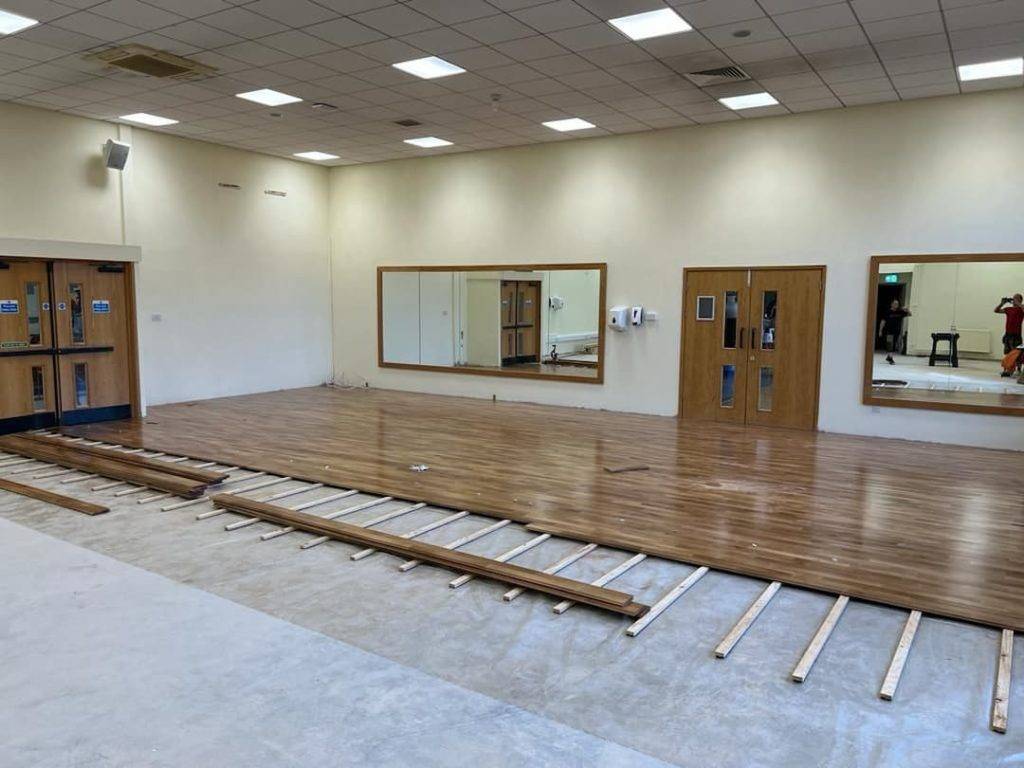
Many sports floors are not boards laid on concrete but a sprung system: timber battens or a cradle on resilient pads, with the boards floating on top. When that structure fails, the surface shows it as dead spots, squeaks or an area that feels different underfoot.
Repairing it means lifting the boards over the affected area, replacing failed pads, battens or fixings, packing out any voids and relaying the boards so the floor responds evenly again. The repaired area is then sanded, sealed and re-marked to match. Where a system has failed across a large part of the hall, our sprung floor installation and restoration service covers replacement.
The hall is usually the hardest-working room in the building, so the programme is built backwards from your calendar rather than ours. Schools are typically done over half term or the summer break; leisure centres get overnight shifts or phased sections so the timetable keeps running; clubs get weekend blocks around fixtures.
Curing matters as much as the work itself. We tell you exactly when the floor can take foot traffic, when equipment and posts can go back, and when full play can resume, so nothing is guessed and nobody walks across a fresh seal. That handover date is agreed in writing before we start, and we hold to it.
Afterwards, our maintenance and aftercare keeps the new finish where it should be, including a cleaning demonstration for your own site team.
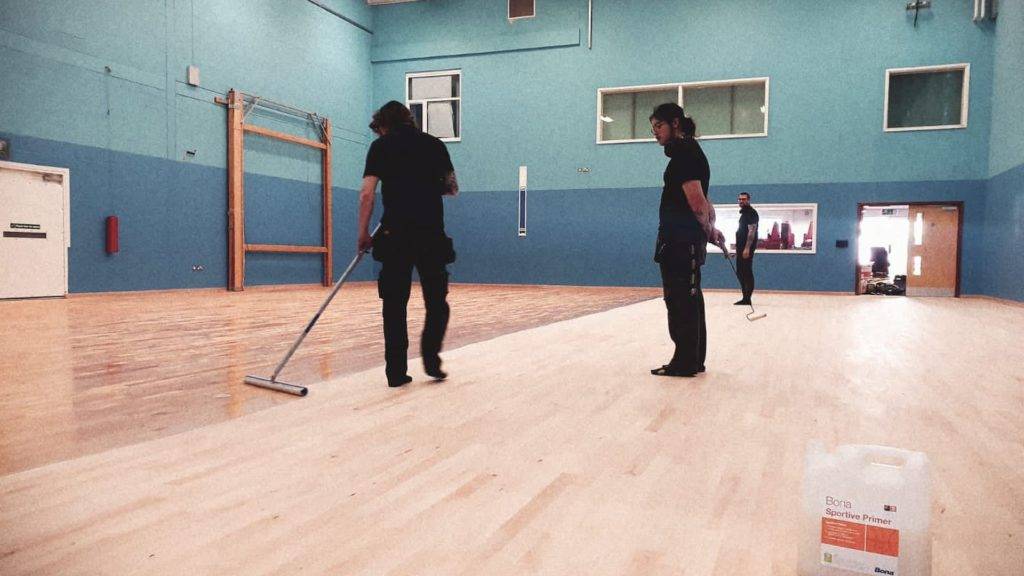
Yes. Water-damaged boards are cut out and replaced with matching timber once the sub-floor has dried, then sanded and sealed to blend with the rest of the floor. We check moisture levels before any new boards go down, because laying timber onto a wet base repeats the damage.
In most cases, yes. We match the species, width and profile of the existing boards, fit them into the original floor and finish them with the same lacquer. On older floors a new board can look slightly different at first and tones in as the timber ages.
Dead spots are areas where the floor no longer flexes as it should, so the ball bounce drops away. They are usually caused by failed pads or battens, loose fixings or voids beneath the boards. Once we have found the cause, we lift the affected area, repair the sub-structure and relay the boards.
Yes, though each needs a different method. Vinyl and polyurethane are repaired by re-welding seams or inserting new material, and Granwood blocks are reset or replaced and then coated. Neither can be sanded like timber. We will identify your floor free of charge if you are unsure what it is.
Yes. Smaller repairs are often completed overnight or over a weekend, and larger repairs can be phased or scheduled for half term and the summer holidays so your bookings are not affected.
It depends on the size of the damaged area, the floor type and whether the cause sits in the boards or the structure beneath. A free survey turns that into a fixed written quotation. Where a repair alone is not enough, we will price the alternatives too, from a recoat to a full refurbishment.
It should not. Replacement boards are matched in species, thickness and profile, and any sub-structure is rebuilt to give the same response as the surrounding floor. Lines are re-marked and the area is sealed in the same finish, so ball bounce and grip stay consistent across the court.
Yes. We repair timber, vinyl, PU and Granwood floors whoever installed them, including floors laid decades ago. We identify the system and timber during the survey and source matching materials before work starts.
Repairs are often part of a wider programme. See our sports hall floor refurbishment service, sanding and sealing, Granwood floor restoration, sprung floor restoration, gym floor refurbishment and commercial wooden floor restoration. We work across all the areas we cover nationwide.
Call us to arrange a survey and a fixed quotation for your sports hall floor repairs.